Why Do My Hands Go Numb at Night?
It's 4:10 a.m. You surface from sleep with a strange, heavy hand lying on the pillow beside you. It doesn't feel like yours. Your thumb and first two fingers are buzzing, as if they were packed with warm sand. You shake it, and slowly the pins and needles fade.
If this happens to you, you are far from alone. Numb, tingling hands are one of the most common reasons people wake in the small hours. Most of the time the cause is simple and mechanical. Sometimes it is worth a closer look. This page covers both. At the end are five points I press before bed. Three are on the arm: the inner forearm (PC6), the back of the forearm (TE5) and the wrist crease (HT7). Two are on the hand: the thumb web (LI4) and the finger webs (EX-UE9).
Numb hands at night: the short answer
| Question | Answer |
|---|---|
| Why does it happen? | Most often a nerve is squeezed for hours: a bent wrist, a bent elbow, or an arm trapped under your body or head. |
| Is it serious? | Now and then, and gone within minutes of moving? Usually not. Most nights, or numbness that lingers by day, deserves a doctor's visit. |
| What's the most common cause? | Carpal tunnel, where a nerve is pinched at the wrist. It typically affects the thumb, index and middle fingers. |
| What to do when it wakes you? | Shake the hand loosely, straighten the wrist and elbow, and change position. No pressing at night. |
| When is it an emergency? | Sudden numbness or weakness on one side of the face, arm or leg, or trouble speaking. Call an ambulance at once. |
| What to do before bed? | Set up your pillows so your wrists stay straight, then about ten minutes of pressing on both arms. |
Press along with me: a video for numb hands at night
If you would rather watch than read, here I press the points on myself, sitting down. Pause it any time.
How to Relieve Arthritis Pain in Your Hands (16-Min Acupressure) · Watch on YouTube
Why do my hands go numb at night?
Your arm carries three main nerves down to the hand. Each one passes through narrow spots on the way: the side of the neck, the armpit, the inside of the elbow and the wrist.
During the day you move all the time, so no spot stays squeezed for long. At night you lie still for hours. If your wrist is curled, your elbow is folded or your arm is pinned under you, one of those nerves gets pressed. It sends a warning in the only language it has: tingling, buzzing, then numbness.
That is why the feeling often wakes you, and why it eases once you move. The squeeze lifts, the nerve gets its blood supply back, and the signal settles.
Which fingers go numb? It tells you where to look
This is the most useful thing you can learn tonight. Next time it happens, notice which fingers are affected.
- Thumb, index, middle and half the ring finger. This points to the median nerve at the wrist. That is the carpal tunnel.
- Ring and little finger. This points to the ulnar nerve at the elbow, the "funny bone" nerve. Sleeping with the elbow tightly bent is the usual trigger.
- The whole hand, or the whole arm. Often the arm was trapped under your body or pillow, or pressed at the armpit or shoulder.
- Both hands and both feet, day and night. This pattern points away from the wrist and toward the nerves as a whole. Your doctor will want to check things like blood sugar and vitamin B12.
Write it down for a week. Which hand, which fingers, what time, and what position you woke in. That small note will help your doctor more than you might expect.
Hands tingling at night: the usual causes
1. A curled wrist
Many of us sleep with our hands tucked under the chin or the pillow, wrists bent sharply. It feels cosy. But a folded wrist narrows the tunnel the median nerve runs through, and hours of it can wake you with buzzing fingers.
What helps: keep the wrist straight, like the hand of a sleeping baby resting flat. A soft wrist splint worn at night is one of the first things doctors suggest.
2. Carpal tunnel
The carpal tunnel is a narrow channel at the front of your wrist. Tendons and one nerve squeeze through it together. When the space gets tight, from swelling, arthritis, fluid or years of gripping, the nerve gets pinched more easily.
Carpal tunnel is famous for being worse at night. Many people say the same thing: they wake, shake the hand hard, and the feeling comes back. That shake is almost a signature.
It's more common after fifty, and in people with diabetes, an underactive thyroid, rheumatoid arthritis or extra fluid. It also often follows years of hand-heavy work.
What helps: a night splint, straight wrists, and a doctor's opinion if it's happening most nights.
3. A bent elbow or a trapped arm
Fold your arm tightly under your pillow, and you bend the elbow hard. That stretches the ulnar nerve and squeezes the ring and little fingers. Lie on your arm, and you can press the nerves in the armpit or upper arm.
What helps: a pillow to hug or rest your arm on, so the elbow stays loose and the arm stays out from under you.
4. Your neck
Some of these nerves begin in the neck. Wear and tear in the spine, a disc or a stiff, bent neck can irritate a nerve root there. The tingling then runs down into the hand. Too many pillows push your chin toward your chest and make this worse.
What helps: one pillow at the right height, so your neck stays level with your spine. If the numbness comes with neck pain that spreads down the arm, ask your doctor to look at the neck.
5. Circulation
Arms raised over your head for hours, or a shoulder pressed hard into the mattress, can slow the blood flow to the hand. The hand then "falls asleep".
What helps: keep your arms below shoulder height at night, and change sides now and then.
6. Diabetes, B12 and other whole-body causes
Sometimes the problem isn't one pinched spot. Long-term high blood sugar can wear on the small nerves, usually starting in the feet. Low vitamin B12 can do something similar. It's more common with age, a plant-based diet, stomach surgery and some long-term medicines, such as metformin and acid reducers.
An underactive thyroid, heavy drinking, kidney problems and some other medicines can also play a part.
What helps: a simple blood test. If both hands and both feet tingle, and it isn't only at night, please ask your doctor for one. Don't start or stop medicines on your own.
What to do when numb hands wake you
You're awake, your hand is buzzing, and you want to get back to sleep. Here's what I do. None of it involves pressing a point.
- Shake it out gently. Let the hand hang off the edge of the bed and give it a loose, floppy shake, like flicking water off your fingers.
- Straighten the wrist. Lay your palm flat on the mattress or your thigh, fingers long. Hold it there for a few slow breaths.
- Unfold the elbow. Let the arm lie long beside you rather than folded under your pillow.
- Change position. Roll onto your back or the other side, and rest the arm on a pillow.
- Breathe out slowly. The tingling usually fades within a few minutes. Your job now is to stay calm and warm while it does.
If you need to get up for the bathroom, sit on the edge of the bed for 30 seconds first. A numb hand is not a good hand to grab a rail with.
One thing I don't do at 4 a.m.: press points. Hunting for a tender spot is wake-up work. And a hand that's still numb can't tell you how hard you're pressing. I keep all my pressing for the daytime and for bedtime, when the feeling is back.
The best sleeping position for numb hands
You don't need a special bed. You need a few pillows in the right places.
- On your back: arms by your sides, palms down or resting on your stomach. A small pillow under each forearm keeps the wrists flat.
- On your side: hug a pillow to your chest. Your top arm rests on it and your bottom arm stays out from under you. Keep both wrists straight.
- Not on your front, if you can help it. It tends to pull the arms overhead or trap one under you.
- Arms below the shoulder line. No hands under the pillow, no arms above the head.
- One pillow under your head, not a stack.
If you keep curling your wrist in your sleep, try a soft wrist splint. A small towel wrapped around the wrist and held loosely with a bandage does the same job for a night or two. It should feel snug, never tight.
When to see a doctor about numb hands at night
Most numb hands at night are positional. Still, some signs need a doctor's eye. Please see your doctor if:
- the numbness happens most nights, or lasts long after you've moved
- it's there during the day as well
- your hand feels weak, you drop things, or buttons and jar lids have become hard
- the muscle at the base of your thumb looks flatter than it used to
- both hands and both feet tingle or burn
- you have diabetes and notice new numbness anywhere
- the numbness comes with neck pain that runs down the arm
Call an ambulance at once (911 in the US, 999 in the UK, 000 in Australia) if numbness comes suddenly with any of these:
- one side of the face drooping or going numb
- sudden weakness in an arm or leg, especially on one side
- slurred or confused speech, or trouble understanding words
- sudden loss of vision, a severe headache, or loss of balance
These can be signs of a stroke. Don't wait to see if it passes, and don't sleep on it. Every minute counts.
If any sign on this list fits you, start with your doctor. The routine below can wait.
For a medical view, read the NHS guide to carpal tunnel syndrome, a common cause of numb hands at night.
Before bed: five points I press for numb hands
I have studied Vietnamese acupressure for fifteen years. This is the short routine I do, sitting on the edge of my bed, about ten minutes in all. Do it in the evening, when your hands have normal feeling, never while they're numb.
One rule runs through all five. If a tingle or buzz runs into your fingers while you press, lift off at once and move aside a little. That means you're on a nerve. And I leave the very middle of the inner wrist crease alone on numb hands. That's right over the carpal tunnel, and it doesn't need more pressure.
If your thumb side tingles: the inner forearm — Neiguan (PC6)

Turn your palm up and rest your forearm on your lap. Lay three fingers across your wrist crease, pointing up your arm. Where the far edge of the third finger lands, cup your hand a little. Two cords rise up. The spot sits in the gap between them.
Press gently here, more gently than anywhere else on this list. Search the gap for the spot that stings. One to three minutes on each arm.
If your neck and shoulder feel tight too: the back of the forearm — Waiguan (TE5)

Turn your forearm palm down. Lay three fingers across the back of your wrist, starting at the crease. Right above them, between the two bones, is a soft valley. Search it for the tender spot. One to three minutes on each arm.
This spot sits on the back of the very same stretch of forearm as the one before. You can press both at once with a gentle pinch, thumb inside and first finger outside. Go lighter than you think.
For a hand that feels stiff and heavy: the thumb web — Hegu (LI4)
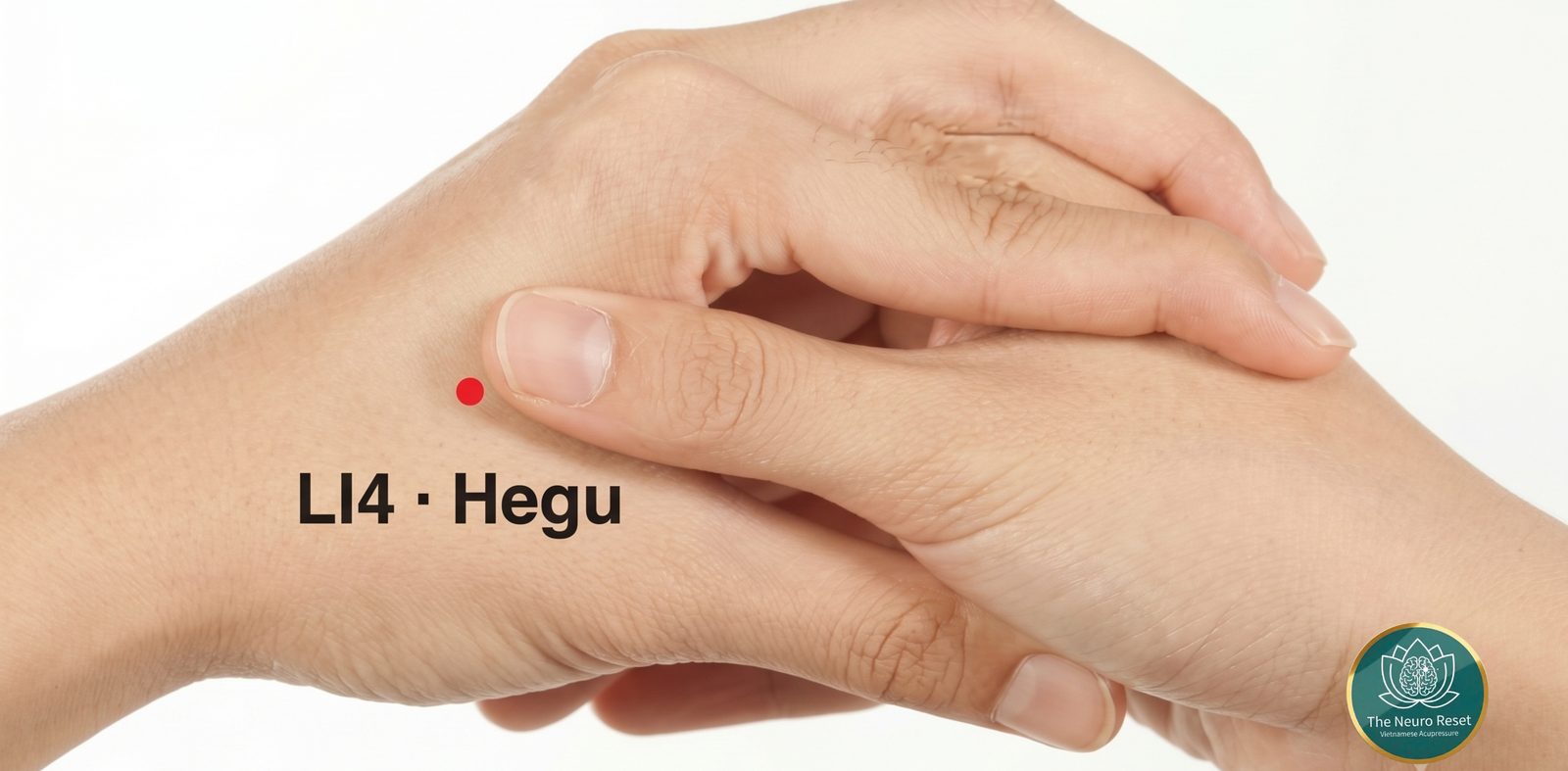
Rest your hand palm down on your thigh. Walk your other thumb back from the web, along the bone of your first finger, to about halfway. Roll onto the mound of muscle there. Search for the spot that stings. One to three minutes on each hand.
Skip this point if you are pregnant.
For puffy, slow fingers: the finger webs — Baxie (EX-UE9)
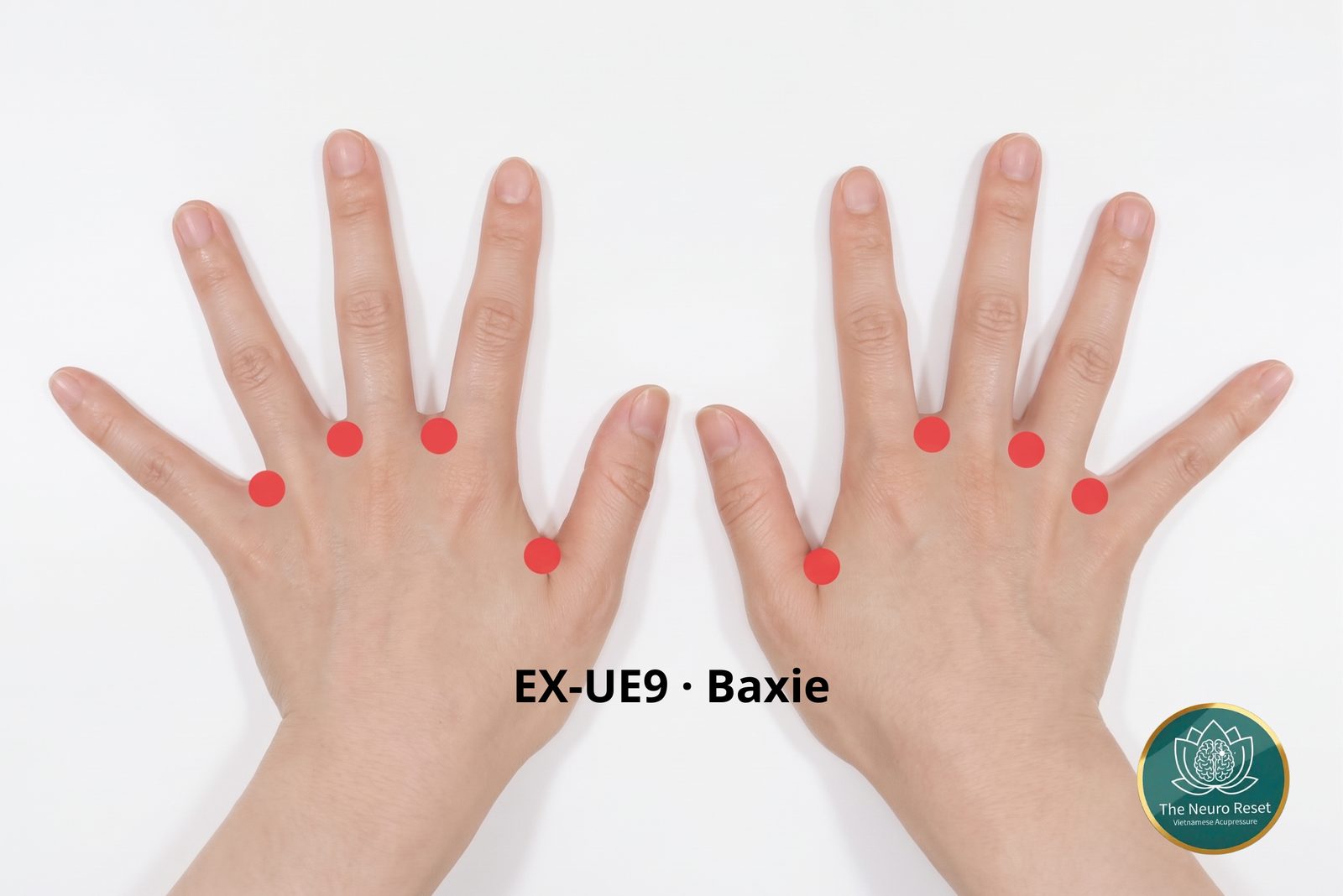
Rest your hand palm down, fingers loose. Run your thumb along the edge of each web between your knuckles. Stop where the darker skin of the back of the hand meets the paler skin of the palm side. Search there for the spot that stings.
There are four webs on each hand. Start with about a minute on each one, and build up over the evenings. Afterwards, open and close your hands slowly five or six times.
To settle before sleep: the wrist crease — Shenmen (HT7)
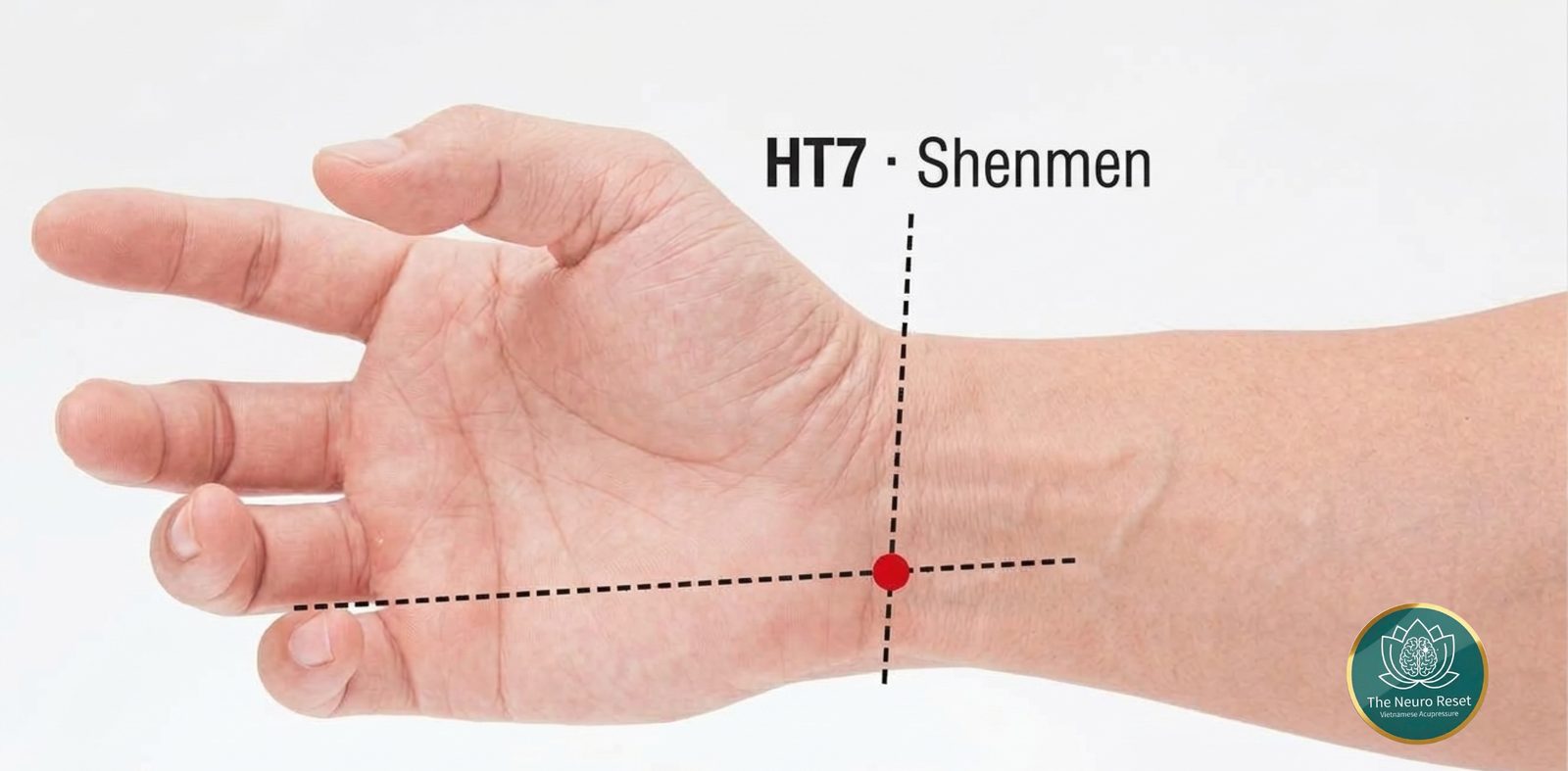
Turn your palm up. Follow the wrist crease toward the little-finger side, until your fingertip meets a small round bone. There's a hollow tucked in right beside it, on the thumb side. Press there with the tip of your other thumb. One to three minutes, then swap wrists.
When you finish: wrists straight, arm on a pillow, phone face down and out of reach.
How I press the points for numb hands at night
- Find the area. You don't need to land on a pinhead. Get into the right neighbourhood.
- Search for the tender spot. Move your fingertip slowly around the area. One spot will feel sharper than the rest. That's your spot.
- Make small circles on that spot. Use the tip of your thumb, nail short, or the round end of a pen-style tool. Circle slowly without sliding away.
Start with about one minute per spot, and build up to two or three over the following nights. It should feel tender while you press and ease once you lift off.
Stop and leave a spot alone if it still hurts after you lift off. The same goes if the pain spreads, the skin looks swollen, hot or red, or numbness stays after you let go.
Weak or numb fingertips? A smooth, round-ended tool does the pressing for you. It's a real help when your thumb can't grip well or can't feel well.
The honest timeline for numb hands at night
Some changes work on the first night. Straight wrists, a pillow to hug and arms below your shoulders often make a difference straight away. That's the quickest win on this page.
The pressing is slower. Think ten minutes each evening for two to four weeks. Many people notice their hands feel looser and less heavy at bedtime. Some notice very little, and I'd rather tell you that now.
What This Won't Do
This won't release a pinched nerve, and nobody honest can promise that from a pressure point. It won't replace a splint, a blood test or a visit to your doctor. If you've been given medicine or a splint, keep using exactly what was prescribed. This is something you do in addition. A calm ten minutes for your hands, so you go to bed with them loose and warm.
Short videos on numb hands at night
Two short clips from my channel on the same subject. Each one is under a minute.
Questions people ask about numb hands at night
Why do my hands go numb at night? Most often a nerve is squeezed for hours because your wrist is curled, your elbow is bent or your arm is trapped. Carpal tunnel is the most common cause. Neck problems, diabetes and low vitamin B12 can also play a part.
Is numbness in the hands at night serious? Now and then, and gone within minutes of moving, it's usually not. If it happens most nights, lingers by day or comes with weakness, see your doctor. Sudden one-sided numbness with face or speech changes is an emergency.
Why do I wake up with numb hands every morning? Usually your sleeping position is pressing on the same nerve night after night. A curled wrist under the pillow is the classic culprit. If straightening your wrists and changing your pillows doesn't help within a couple of weeks, ask your doctor about carpal tunnel.
Is carpal tunnel worse at night? Yes, for many people. The wrist tends to curl during sleep, and lying still lets fluid gather around the tunnel. That's why many people wake and shake their hand to get the feeling back.
What is the best sleeping position for numb hands? On your back or side, with wrists straight and arms below your shoulders. Hug a pillow if you sleep on your side, so your arms stay out from under you. Avoid tucking your hands under the pillow.
Can low B12 cause numb hands? Yes, low vitamin B12 can affect the nerves and cause tingling in the hands and feet. It's more common with age and with some long-term medicines. A blood test from your doctor will show it.
Are there pressure points for numb hands? I press five on the forearms and hands in the evening: PC6, TE5, LI4, the finger webs and HT7. I never press while the hand is numb, and I lift off at any tingle into the fingers. It's a way to settle the hands before bed, not a replacement for your doctor.
Should I press points when numb hands wake me at night? No. At night, shake the hand loosely, straighten the wrist and change position. Pressing is wake-up work, and a numb hand can't judge pressure.
I have spent fifteen years studying traditional Vietnamese medicine, and I write about things you can do for yourself at home, sitting down.
This is general wellness education, not medical advice. It is not a substitute for care from your doctor. If you have a health condition, are pregnant, or take medication, check with your doctor first.
(Points shown: PC6 Neiguan, TE5 Waiguan, LI4 Hegu, EX-UE9 Baxie, HT7 Shenmen.)