Arthritis Pain in Hands: A 16-Minute Routine to Press Along
It's 7 a.m. You reach for the coffee jar, and your fingers won't close around the lid. They feel thick and stiff, like gloves left out in the frost. You run them under warm water and wait. The lid can wait too.
If arthritis pain in your hands starts your day like this, this page is for you. It is the written version of my 16-minute press-along video. We sit at a table and work seven spots in order. On the hand and arm: the finger joints, the outer elbow (LI11, LI10), the inner elbow (PC3, HT3), the wrist on the thumb side and the web between the ring and little fingers. Then the base of the neck (GV14) and the top of the shoulder blade (SI14).
Arthritis pain in your hands: the short answer
| Question | Answer |
|---|---|
| Can pressing points help arthritis pain in hands? | It may help the hands feel warmer and looser. It does not change the joint itself. |
| Which spots are in this routine? | Finger joints, outer elbow (LI11, LI10), inner elbow (PC3, HT3), wrist on the thumb side, ring–little finger web, base of the neck (GV14), top of the shoulder blade (SI14). |
| How long does it take? | About 16 minutes, sitting at a table. Roughly one minute per side for most spots. |
| How hard should I press? | Hunt for the spot that stings. That's the one. Stay on it. Wrists and the inside of the elbow need very little pressure. |
| What should I skip? | Any joint that is hot, red or swollen. On flare days, press around the joint, not on it. |
| Do I stop my medication? | No. Keep taking what your doctor prescribed. This is something you do alongside it. |
Press along with me: the video for arthritis pain in your hands
This page is the written version of the video below. Watch it and press along with me, or read the steps further down. Pause any time.
How to Relieve Arthritis Pain in Your Hands (16-Min Acupressure) · Watch on YouTube
Why do my hands hurt so much in the morning?
Your joints sit still for hours while you sleep. The fluid inside them thickens a little, like honey in a cold kitchen. The first movements of the day have to warm it up again.
When a joint is worn or inflamed, that first hour can feel like a fight. The knuckles ache, the grip is weak, and small jobs become big ones. Buttons. Keys. The tap. The jar lid.
Your pain is real. It is not only your age, and it is not in your head. Maybe you were told it's wear and tear, and sent home with nothing to do. This routine is one small thing you can do with your own hands, every day.
Is it arthritis, or something else?
There are two common kinds. Wear-and-tear arthritis often hits the end joints of the fingers and the base of the thumb. The stiffness usually eases within a short while of moving.
Inflammatory arthritis, such as rheumatoid arthritis, tends to affect both hands in a matching pattern. The joints can look puffy and feel warm, and the stiffness lasts a long time each morning.
Your doctor can tell them apart. Please don't guess on your own. If your hands are numb or tingle at night rather than ache, that is often a different story. Mention it to your doctor too.
Why the elbow, the neck and the shoulder for painful fingers?
Most people expect a hand routine to stay on the hands. Four of these seven spots do. The last three steps move up the arm.
Think of your fingers as puppets. The strings that move them are long muscles in your forearm. Those muscles start near the elbow. When the forearm is tight, the fingers feel it.
The nerves that feed your hand leave the spine at the base of your neck. They pass the shoulder blade, then the elbow, on the way down. You have felt one of them: the "funny bone" on the inside of the elbow sends a tingle to your little finger.
The routine follows a Vietnamese method called Dong Ung. It finds the most tender spots and works them by hand. Its routine for painful finger joints goes from the fingers to the elbow, the wrist, the neck and the shoulder blade. I follow that order exactly.
Before you start
Sit at a table with your forearms resting on it. Have a stick nearby if you own one. A thumb tip works too, gently.
A quick check first. Skip any joint that is hot, red or swollen today. Skip broken skin, a rash or a recent operation site. If you take blood thinners or have a pacemaker, talk to your doctor before you start.
The routine, point by point
We do the right side first, then the left. For each spot: find the area, search slowly for the most tender point, then make small, slow circles there.
For stiff finger joints: kneading the fingers in order
Take your right hand. With the thumb and first finger of your left hand, hold one finger at a time. Knead each joint gently, from the knuckle out to the tip (video 0:46).
The order matters in this method. Ring finger first, then the thumb, the middle finger, the first finger, and the little finger last. About a minute for the whole hand, then give your left hand the same, ring finger first.
Knead, don't bend. On a flare day, knead the soft parts between the joints instead of the joints themselves.
For the fingers, from the forearm: the outer elbow — Quchi (LI11) and Shousanli (LI10)

Bend your right elbow and rest the forearm on the table, thumb up. Find the end of the crease on the outer side of the elbow. That is the first spot (video 3:14).
Search there for the tender point and make small circles. Halfway through, slide three fingers' width down the forearm, along the same line, into the thick muscle. That is the second spot.
Let the arm go heavy on the table. About a minute, then bend your left elbow and repeat: end of the crease first, then three fingers down. Pressing this thick muscle with a stiff, sore thumb can hurt more than the spot itself. That is why I use a stick here.
For the fingers, from the inside of the arm: the inner elbow — Quze (PC3) and Shaohai (HT3)
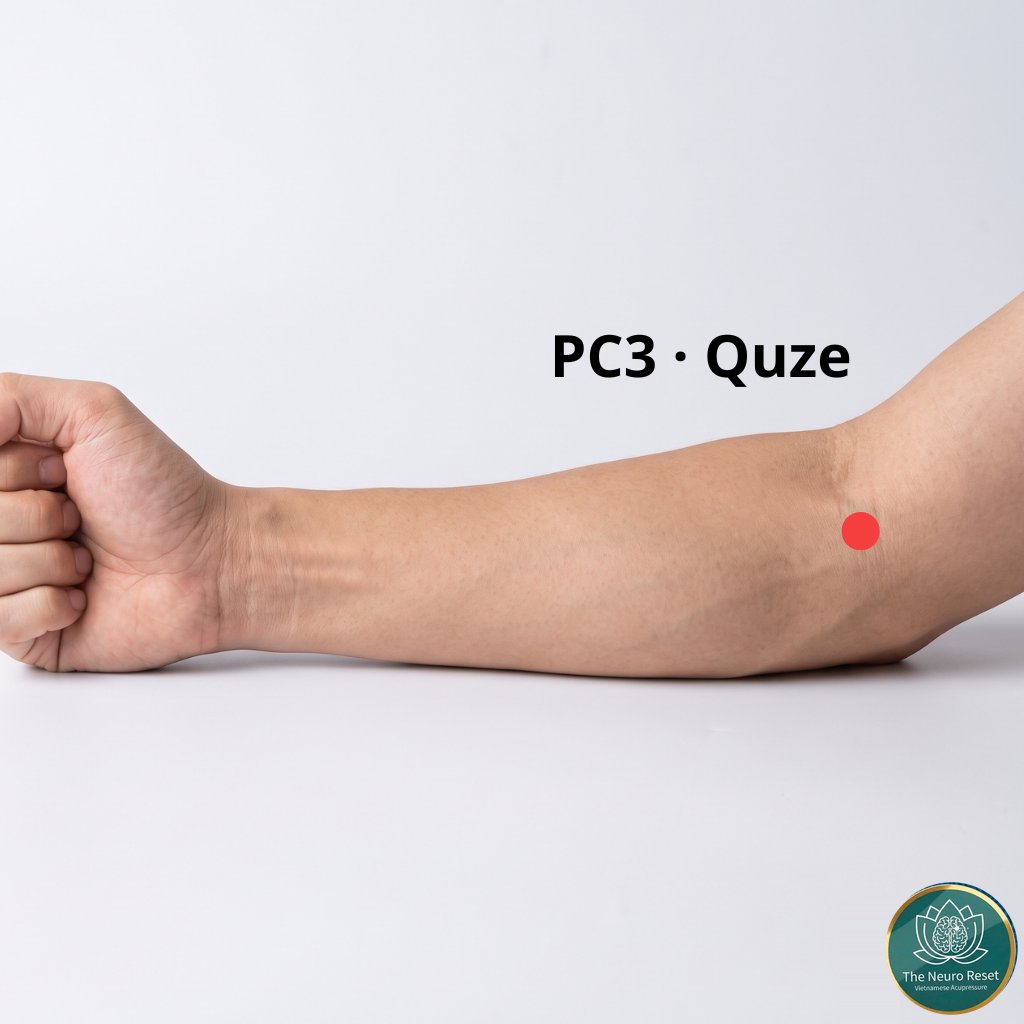
Turn your right palm up, elbow slightly bent. Feel the firm cord in the middle of the elbow crease. The first spot is in the soft dip right beside it, on the little-finger side (video 5:49).
Use a fingertip here, not a stick. This area needs very little pressure. If you feel a pulse, move a little off it.
Halfway through, move to the inner end of the same crease, near the bony bump. If a tingle runs toward your little finger, ease off. About a minute, then turn your left palm up and repeat.
For the base of the thumb: the wrist, thumb side
Right palm up. Find the crease where your hand meets your wrist, and go to its thumb-side end. From there, a line runs up into the fleshy pad at the base of your thumb (video 8:19).
Work slowly along that line, from the wrist toward the thumb pad. Press beside the bones, never on the joint. Light pressure: wrists don't need force.
This one is short. About 30 seconds, then swap to the other wrist for 30 seconds.
For aching fingers: the web of the ring and little finger
Right palm up. Find the small web of skin between your ring finger and your little finger. Search the edge of that web first (video 9:41).
Then search a little way down into the palm, in the groove between those two finger bones. A dull ache that spreads into the fingers is normal. About 30 seconds, then swap hands for 30 seconds.
For the nerves that feed the hand: the base of the neck — Dazhui (GV14)
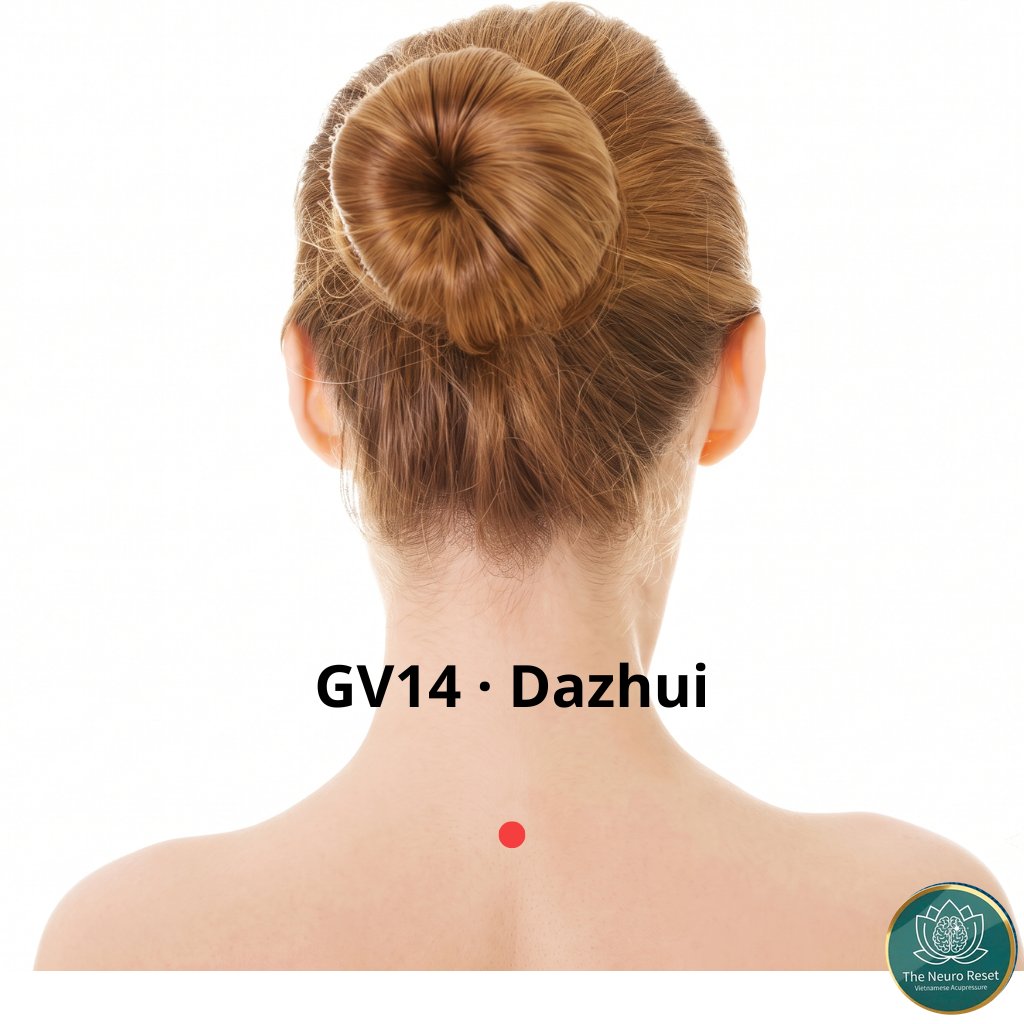
Now we leave the hands. Drop your chin a little and feel the biggest bump at the base of your neck. The spots are on both sides of that bump, close beside it (video 11:00).
Your right hand reaches to the left side of the bump. Search for the tender spot, then small circles. Stay beside the bone, not on it.
Keep your shoulders soft and breathe out slowly. About a minute, then your left hand reaches to the right side. If raising your arm is hard, hold a stick and let it reach for you.
For the whole arm: the top of the shoulder blade — Jianwaishu (SI14)
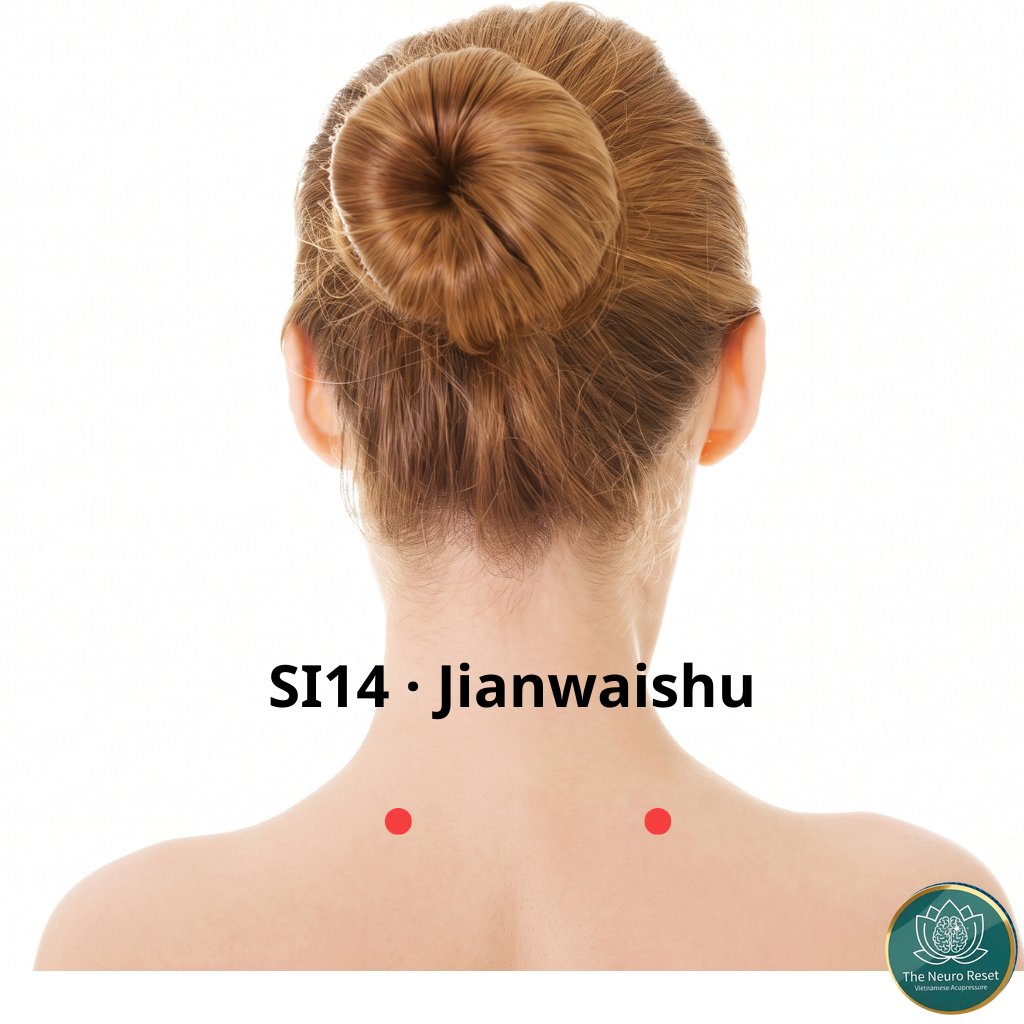
From the bump at the base of your neck, slide out along the top of your shoulder. Go about four fingers' width from the spine, onto the top edge of the shoulder blade (video 13:28).
Your right hand reaches over to the left shoulder blade. Let your elbow rest on the table if you can. A stick helps here if your arm does not lift easily.
About a minute, then switch sides. Halfway through, notice your hand. Does it feel any warmer?
To finish
Open and close your hands slowly, five times. A soft fist, then spread your fingers wide. Notice how they feel compared with the start.
One more step comes from the same Dong Ung routine. On another day, if you can reach your feet comfortably, knead your toe joints the same way. If bending that far is hard, leave it out.
How I press the points for arthritis pain in your hands
- Find the area. You don't need a pinhead. Get into the right neighbourhood.
- Search for the tender spot. Move slowly. One spot will feel sharper than the rest. That's your spot.
- Make small circles on that spot. Slow and steady, without sliding away.
It should feel tender while you press and ease once you lift off. If it still hurts after you let go, leave that spot alone. Hunt for the spot that stings. That's the one. Stay on it.
Here is the hard part nobody mentions. With arthritis, the hands that hurt are the same hands you have to press with. A stiff, sore thumb pushing into a thick elbow muscle often hurts more than the spot itself. So people stop after two days, and decide it doesn't work.
Your hands get tired. The tool doesn't. I use the small tip of a round-end stick, the Neuro Reset Round-End Stick, for the elbow and the wrist line. The small tip does the pressing, so your thumbs don't have to. If you'd rather start with your thumb tip, that works too. Go gently.
When to see a doctor about arthritis pain in your hands
Arthritis pain in hands is common, but some signs need a doctor, not a routine. Please see your doctor if:
- a joint is suddenly hot, red and swollen
- you have a fever along with joint pain
- you have severe new pain, or pain after a fall
- your fingers are bending out of shape more than before
- your hand is numb, tingles, or feels weak, or you drop things
- the stiffness lasts a long time every morning, or both hands swell in the same places
Keep taking the medicine your doctor prescribed. If any of these fit, start with your doctor. The routine can wait.
The honest timeline for arthritis pain in your hands
Some people feel their hands a little warmer and looser by the end of the 16 minutes. That is a good sign, not a promise.
Steady change is slower. Think of about 16 minutes a day, for two to four weeks. Changes in the hands usually come over weeks, not in one morning. Some people notice very little, and I'd rather you heard that from me now.
What This Won't Do
This won't rebuild worn cartilage or straighten a finger that has changed shape. It won't calm an inflamed joint the way your medicine does. If your hands ache more on cold, damp days, I wrote about that in why joints hurt when it's cold.
What it can be is a small, steady routine you do with your own hands. Something that is yours, between doctor visits.
Questions people ask about arthritis pain in your hands
What pressure points help arthritis in the hands? The Dong Ung routine I follow starts with the finger joints. Then the outer elbow (LI11, LI10), the inner elbow (PC3, HT3), the wrist on the thumb side, and the web between the ring and little fingers. It ends at the base of the neck (GV14) and the top of the shoulder blade (SI14).
How do I stop my hands hurting from arthritis at night? I can't promise to stop it. Many people find warm hands and a gentle routine in the evening help them settle. If pain wakes you most nights, tell your doctor; it may need a change in your care.
Is it safe to massage arthritic fingers? Gentle kneading is usually fine on quiet days. Skip any joint that is hot, red or swollen. On flare days, work the soft parts between the joints, not the joints themselves.
Why are my fingers stiff in the morning? The joints sit still all night, and the fluid in them thickens. Gentle movement warms them up again. If the stiffness lasts a long time every morning, or your joints look puffy, see your doctor.
Should I press directly on a swollen finger joint? No. Press around it, not on it. A joint that is hot, red and swollen needs a doctor's eye first.
Why does this routine press the elbow and neck for hand pain? The muscles that move your fingers start near the elbow. The nerves that feed your hand leave the spine at the base of the neck (GV14) and pass the shoulder blade (SI14) and elbow (LI11, HT3). The Dong Ung routine follows that path.
Can I do this if I take arthritis medication? Yes, alongside it. Keep taking exactly what your doctor prescribed. If you take blood thinners, ask your doctor before pressing.
How long before I notice a difference? Some people feel a little warmth and looseness the same day. Steady change usually takes two to four weeks of daily practice.
I have spent fifteen years studying traditional Vietnamese medicine, and I write about things you can do for yourself at home, sitting down.
This is general wellness education, not medical advice. It is not a substitute for care from your doctor. If you have a health condition, are pregnant, or take medication, check with your doctor first.
(Points shown: finger-joint kneading in the order ring, thumb, middle, first, little; LI11 Quchi; LI10 Shousanli; PC3 Quze; HT3 Shaohai; wrist thumb-side line; web of the ring and little finger; GV14 Dazhui, both sides; SI14 Jianwaishu. From the Vietnamese Dong Ung routine for painful finger joints.)