Can't Fall Back Asleep After Waking Up to Pee? What to Do Before, During and After
It's 2:40 a.m. A dull pressure low in your belly pulls you up out of sleep. You lie there for a minute, hoping it will pass. It won't. So you push back the covers, feel for the floor with your feet, and make the trip down the hall.
The trip takes three minutes. Getting back to sleep can take two hours. You climb back in, pull the blanket up, and your mind is suddenly bright and busy. This page is about those two hours: why they happen, and how to shrink them. At the end are four points I press before bed. They are the inner forearm (PC6), the wrist crease (HT7), the sole of the foot (KI1) and the inner leg above the ankle (SP6).
Falling back asleep after waking up to pee: the short answer
| Question | Answer |
|---|---|
| Why can't I get back to sleep? | Standing up, bright light, a cold floor and a busy mind all tell your body it's morning. The trip itself is short. The waking-up is what lingers. |
| Is once a night normal? | Once a night is common after sixty. Several times a night, every night, is worth a visit to your doctor. |
| What helps most on the night? | A dim, warm, boring trip. A low night light, socks by the bed, no clock, no phone, and a slow breath out when you lie back down. |
| What if I'm still awake after 20 minutes? | If lying quietly feels restful, stay. If you're getting cross, go to a dim room and do something dull until you feel sleepy. |
| What can I do before bed? | Ease off drinks in the last two hours, set up the route, and spend about fifteen minutes pressing four calming points. |
If you're getting up more than twice a night, please read the doctor section further down first.
Press along with me: a video for falling back asleep after waking up to pee
If you would rather watch than read, here I press the points on myself, sitting down. Pause it any time.
Woken by Pain at Night? 7 Pressure Points for Sleep (15 Min) · Watch on YouTube
Why can't I fall back asleep after waking up to pee?
You were asleep. Then you were standing, walking, squinting and shivering. Each of these pushes your body toward the day.
1. The light
Your brain reads light as a clock. Bright light, and especially light from above, looks like morning sun to it. One flick of the bathroom switch can tell your brain the night is over. The bright mirror light is the worst of all.
What helps: a small, warm-coloured night light at floor level, in the hall and the bathroom. Enough to see the edge of the bath and the step. Not enough to read by. Leave the main light off.
2. Standing up revs your body
Lying down, your body is in its slowest gear. Then you sit, stand and walk. Your heart speeds up to keep blood flowing to your head.
By the time you're back in bed, your body is idling a few notches higher than when you left. Sleep has to wait for it to slow down again.
What helps: move slowly, there and back. Back in bed, give your body a few minutes of long, slow breaths out.
3. Your mind switches on
This is the big one for most people. The moment you're upright, your thinking brain clocks in. You glance at the clock and do the sums. "Four hours left. If I fall asleep now, I'll get three." Then come the worries. Will I need to go again? Why does this keep happening? What about tomorrow?
What helps: turn the clock to face the wall. Leave the phone in another room, or face down out of reach. And have something dull ready for your mind to hold. I'll come to that below.
4. The cold
Your body cools down at night, and that cooling helps you sleep. A cold floor, a chilly bathroom or bare tile under your feet is a different kind of cold. It's sharp, and it wakes you.
The rest of you warms up under the covers. Your feet stay like two blocks of ice.
What helps: socks or slippers right by the bed, where your feet land.
5. Your sleep is already thin at that hour
By the small hours, your deepest sleep is usually behind you. What's left is lighter, and harder to sink back into.
That's the shape of an ordinary night, and it grows more noticeable with age. More on this in why you wake up in the middle of the night.
Is it normal to wake up to pee once a night?
Yes, for many people. Getting up once a night is very common after sixty, for both men and women. Our bodies change how they handle fluid at night as we age. The bladder often holds less, too.
Two, three or more times a night is different. There can be a cause worth finding, and your doctor is the right person to look. I go through the common ones in why you pee so much at night. This page is about the part after the trip.
As one viewer put it under a video about night-time trips, the nights can feel "up and down all night." If that's you, you're far from alone.
Should I get up to pee if I'm not sure I need to?
If you need to go, go. Lying there holding on keeps you awake far longer than the trip would.
But many people wake for some other reason, and then think, "I might as well go while I'm up." If the urge isn't really there, that trip can do more harm than good. You stand, you walk, you wake up more. Then you lie back down with a busier body than before.
So give it a minute. Lie still and notice. If the urge is real, it will make itself clear. If it fades, you've saved yourself a full wake-up.
How to fall back asleep after going to the bathroom
Getting back to sleep starts in the evening, when you set up the route. Then comes the trip, and the few minutes after you lie down.
Before you turn in: set up the route
- A night light low down in the hall and bathroom. Warm, dim and plugged in, so there's no switch to find.
- A clear path. No shoes, rugs that slide or bags on the floor between the bed and the door.
- Socks or slippers where your feet touch down. A gown on the bedpost if the house is cold.
- A small glass of water on the bedside table, if a dry mouth wakes you. A sip, not a glassful.
- The clock turned away from you, and the phone out of reach.
On the way: slow, dim and dull
- Sit on the edge of the bed for about 30 seconds before you stand. Feet flat, a few slow breaths. This gives your body time to adjust and helps you stay steady.
- Leave the big light off. Let the night light do the work. Skip the mirror.
- Sit down on the toilet, if that is comfortable for you. Many men find this easier at night. It's steadier, and there's less need for light.
- Go straight back. No phone, no fridge, no tidying on the way.
Back in bed: the first five minutes
This is where the night is won or lost. Land gently, the same way each time.
- Settle the same way every time. Same side, same pillow, covers pulled up the same way. Your body learns this pattern as "sleep comes next".
- Warm your feet. If they're cold, socks on before you lie down.
- Breathe out longer than you breathe in. In through the nose. Out slowly through the mouth, as if you were fogging a cold window. A few rounds of this help a revved-up body slow down.
- Relax from the feet up. Let your feet go heavy, then your calves, then your knees. Most nights you won't reach your shoulders.
- Give your mind something dull. Pick a boring list and walk through it slowly. The rooms of a house you once lived in. The streets on an old route to work. Fruits from A to Z. Dull is the point.
One thing I don't do in the night: press points. Searching for a tender spot is wake-up work. I keep all my pressing for the daytime and for bedtime.
What if I'm still awake 20 minutes later?
Don't check the clock to find out. Go by feel.
If you're lying still, warm and fairly calm, stay where you are. Quiet rest in the dark isn't wasted. Your body is still resting, even if your mind is awake. Sleep often comes back once you stop chasing it.
If you're tossing and getting frustrated, it's better to get up. Go to a room with a soft lamp and do something dull: an old book, folding towels. Go back to bed when your eyelids feel heavy. This keeps your bed from becoming the place where you lie awake and get cross.
How to make night-time trips easier on your sleep
A few evening habits make the trip calmer and easier to come back from.
- Drink well earlier in the day, then ease off. Get most of your fluids in before late afternoon. Have less in the last two hours before bed. Don't stop drinking altogether, though. Going thirsty brings its own problems, especially as we get older.
- Keep caffeine to the morning. Tea, coffee, cola and chocolate all count. Caffeine can keep you alert and send you to the bathroom.
- Go easy on evening alcohol. It makes you drowsy at first. Later in the night, it tends to wake you, and it fills the bladder too.
- If your ankles swell by evening, mention it to your doctor. Fluid that collects in the legs during the day can make its way to the bladder once you lie down. Your doctor may suggest ways to help with that.
- Make the bathroom your last stop, right before you lie down. Some people go twice: once when they start getting ready, and once at the very end.
- Keep a bedtime routine your body can recognise. Mine takes about fifteen minutes, sitting on the edge of my bed. It's below.
Before bed: four points I press on myself
I have studied Vietnamese acupressure for fifteen years. This is the short routine I use myself, sitting on the edge of the bed with the lights already low. About ten to fifteen minutes in all.
Start with the point that fits your night. Finish with the wrist crease and the inner leg.
If your mind races when you lie back down: the inner forearm — Neiguan (PC6)
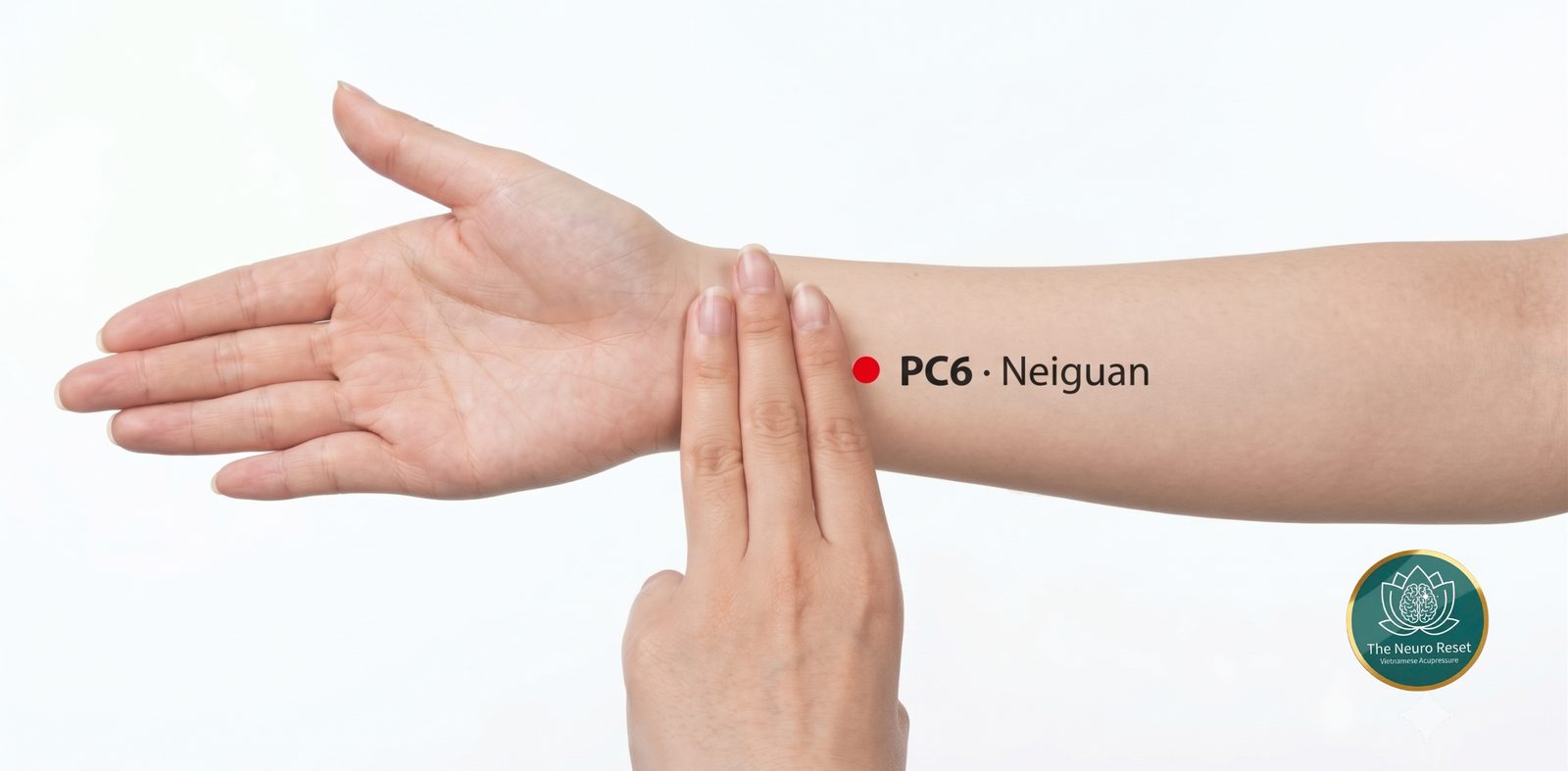
Turn your palm up and rest your forearm on your lap. Lay three fingers across your wrist, starting at the crease, pointing up your arm. Where your third finger ends, cup your hand a little. Two cords rise up in the middle of your arm. The spot is in the gap between them.
Search that gap until one place feels tender, and circle on it. If a tingle runs into your fingers, move a little to one side. One to three minutes on each arm.
Skip this arm if it has a clot, recent surgery, broken skin, or lymph nodes removed.
For everyone: the wrist crease — Shenmen (HT7)
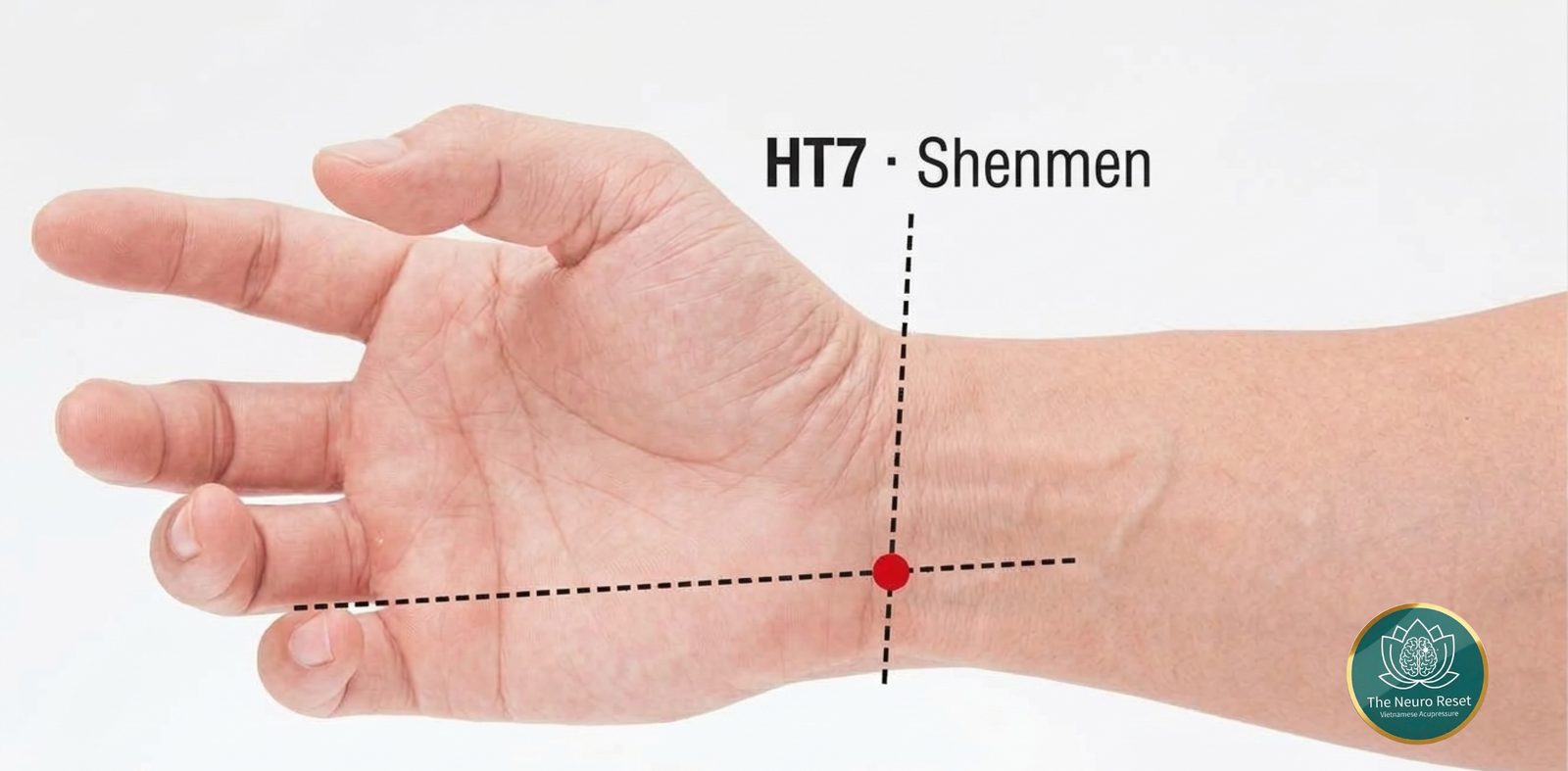
Keep your palm up. Follow the crease at your wrist toward the little-finger side, until your fingertip meets a small, round bone. Step back a few millimetres toward the thumb, into the hollow beside it. Press with the tip of your other thumb until one spot stings, then make small circles.
One to three minutes on each wrist.
If cold or restless feet keep you up: the sole of the foot — Yongquan (KI1)
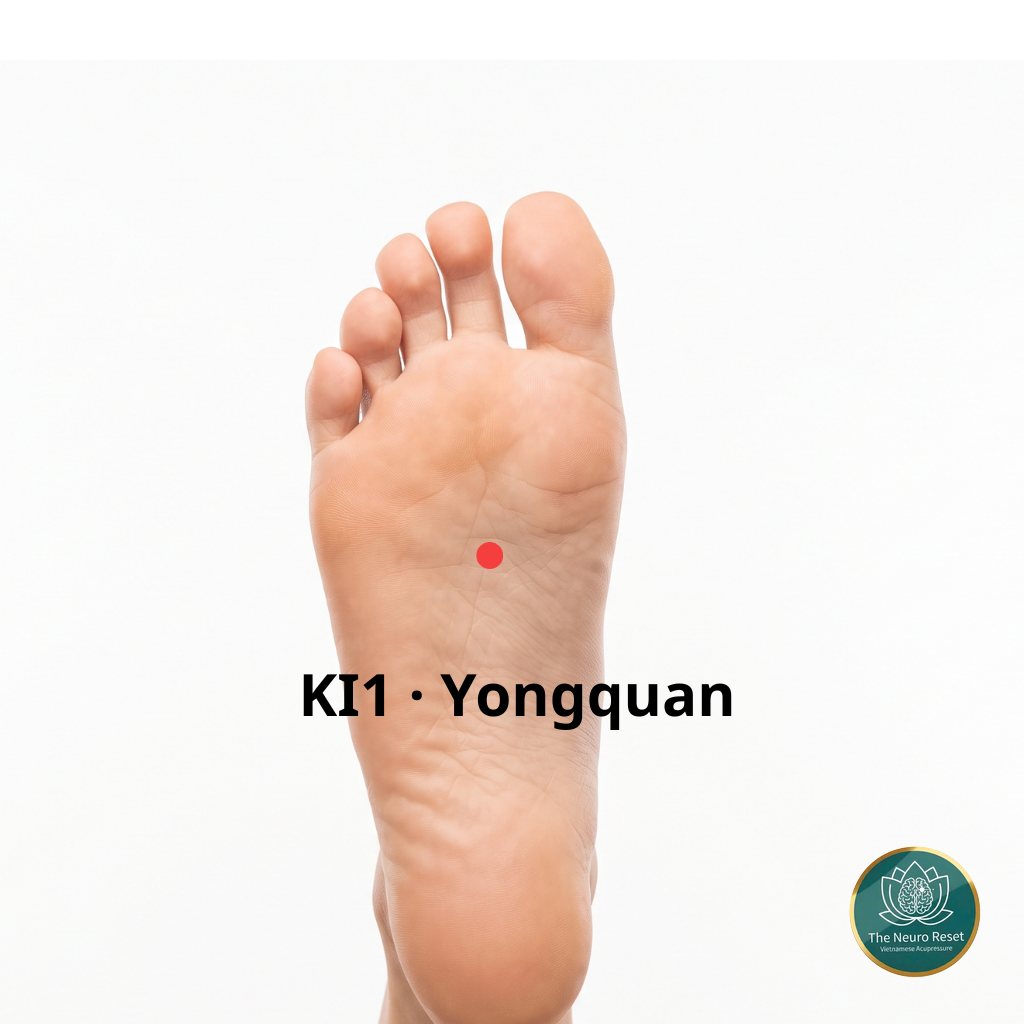
Rest one foot across your other knee, so the sole faces you. Curl your toes. A hollow appears right below the ball of the foot, in line with your second and third toes. It sits about a third of the way from the base of the toes to the heel.
Relax your toes, then search that hollow for the tender spot. One to three minutes on each foot. Socks back on straight after.
Skip this if the sole has cracks, sores or an infection, or if you have poor feeling in your feet.
If the bathroom is what wakes you: above the inner ankle — Sanyinjiao (SP6)
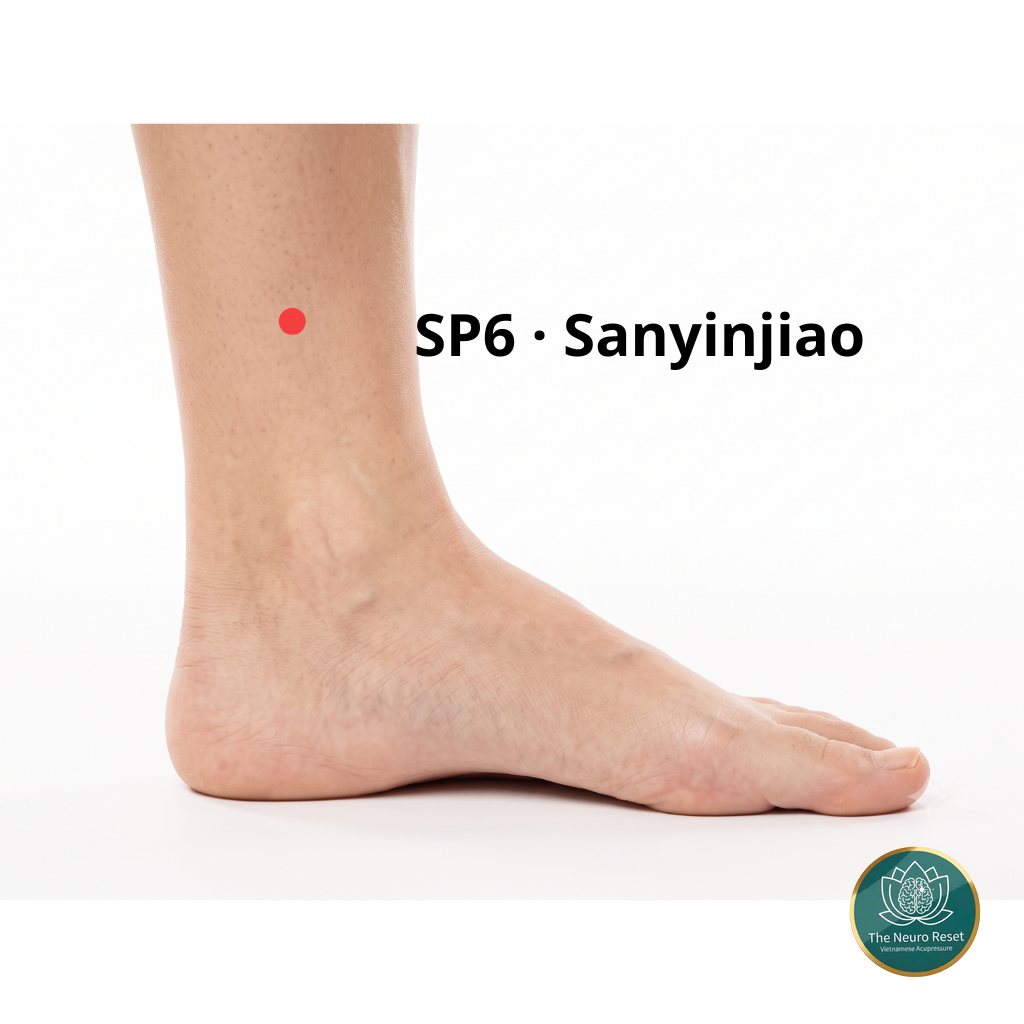
Keep the foot across your knee. Find the bump of your inner ankle bone. Lay four fingers flat above it, going up the leg. At the level of your top finger, find the edge of the shin bone. Roll your fingertip back off it into the soft groove behind. It's often quite tender.
One to three minutes on each leg. This one is traditionally used for waking in the night and for frequent passing of water. I use it as a calming point, not as a way to stop the trips.
Skip this point if you are pregnant. Skip it too if the skin there has varicose veins, swelling, a rash or a wound, or if you've had a clot in that leg.
When you finish: the clock turned away, socks within reach, phone face down in another room. Then lie down.
How I press the points for falling back asleep after waking up to pee
- Find the area. You don't need to land on a pinhead. Get into the right neighbourhood.
- Search for the tender spot. Move your fingertip slowly around the area. One place will feel sharper than the rest. That's your spot.
- Make small circles on that spot. Use the tip of your thumb, not the soft pad, with your nail short. Circle slowly without sliding away.
Start with about one minute per spot. Build up to two or three over the following nights. It should feel tender while you press and ease once you lift off.
Stop and leave a spot alone if it still hurts after you lift your finger off. The same goes if the pain spreads, or the skin looks swollen, hot or red.
Sore or stiff hands? A smooth, round-ended tool can do the pressing for you. It finds the tender spot more easily than a tired thumb.
When to see a doctor about falling back asleep after waking up to pee
Night-time trips are common, but they can also be a message worth listening to. Please see your doctor if:
- you get up to pass water two or more times most nights, or it has changed recently
- it burns or stings to pass water, or you see blood
- the flow is weak, slow to start, or you feel you haven't fully emptied
- you're much thirstier than usual, or losing weight without trying
- your ankles or legs swell by evening
- you snore loudly, gasp, or someone has seen you stop breathing in your sleep
- you've felt dizzy getting up at night, or had a fall on the way to the bathroom
- low mood or worry is keeping you awake most nights
If any of these fit, start there. The routine on this page can wait.
For a medical view, read the NHS guide to insomnia, including waking in the night and not getting back to sleep.
The honest timeline for falling back asleep after waking up to pee
Some things work on the first night. A night light instead of the main switch. Socks by the bed. The clock turned to the wall.
The rest is slower. A bedtime routine usually takes two to four weeks before your body starts to recognise it. That goes for the pressing too: about fifteen minutes each evening, for a few weeks. Many people notice they settle a little faster after a trip. Some notice very little, and I'd rather you heard that from me now.
What This Won't Do
This won't stop you needing the bathroom at night. It won't give you eight unbroken hours, and nobody honest can promise that. It won't replace anything your doctor has given you, either. Keep taking exactly what was prescribed. This is something you do in addition. A routine you can do with your own two hands, so the trip down the hall stops costing you the rest of the night.
Short videos on falling back asleep after waking up to pee
Two short clips from my channel on the same subject. Each one is under a minute.
Questions people ask about falling back asleep after waking up to pee
Why can't I fall back asleep after waking up to pee? Standing up speeds your heart, light tells your brain it's morning, and a cold floor wakes you further. Then your mind starts counting the hours. By the small hours your sleep is lighter too, so it's harder to sink back down.
How do I fall back asleep after going to the bathroom? Keep the trip dim, slow and warm. Back in bed, settle the same way each time, warm your feet and breathe out slowly. Give your mind something dull to hold, such as a slow, boring list.
Is it normal to wake up to pee once a night? Once a night is common, especially after sixty. If it's two or more times most nights, or it has changed recently, ask your doctor to look into it.
Should I use a night light for bathroom trips? Yes. A small, warm-coloured light at floor level lets you see safely without telling your brain it's morning. Leave the main light and the mirror light off.
Should I stop drinking water in the evening? Ease off in the last two hours, but don't go thirsty. Drink well earlier in the day instead. If you take medicine that affects fluids, ask your doctor how to time your drinks.
Can I press acupressure points when I wake up at night? I don't. I press in the daytime and before bed. Searching for a tender spot is wake-up work, and at night the job is to stay calm and warm.
I have spent fifteen years studying traditional Vietnamese medicine, and I write about things you can do for yourself at home, sitting down.
This is general wellness education, not medical advice. It is not a substitute for care from your doctor. If you have a health condition, are pregnant, or take medication, check with your doctor first.
(Points shown: PC6 Neiguan, HT7 Shenmen, KI1 Yongquan, SP6 Sanyinjiao.)