Why Are My Feet Always Cold at Night?
It's 11:40 p.m. The lamp is off, the duvet is up to your chin, and the rest of you is warm. But at the far end of the bed, your feet are two blocks of ice. You rub one against the other. Nothing changes. Twenty minutes later you're still awake, and at 3 a.m. the cold wakes you again.
One comment I read under a sleep video said it in five words: "Cold feet keeps me awake." You are far from alone. This page explains why feet go cold at night, which signs need a doctor, and how to warm them safely. At the end are the four points I press before bed: below the knee (ST36), above the inner ankle (SP6), the sole of the foot (KI1) and the wrist crease (HT7).
Cold feet at night: the short answer
| Question | Answer |
|---|---|
| Why are my feet cold at night? | Your body cools down for sleep and protects its core first. Feet are the furthest point from the heart, so they lose out. |
| Is it worse after 60? | Often, yes. Less movement, thinner skin and slower circulation all play a part. |
| Can cold feet stop me sleeping? | They can. Warm hands and feet are part of how the body settles into sleep. |
| What helps tonight? | Loose socks, a warm (not hot) foot soak, rubbing the feet, and a bed warmed before you get in. |
| When should I worry? | One foot colder than the other, colour changes, pain, numbness, or a sore that stays open. See your doctor. |
Press along with me: a video for cold feet at night
If you would rather watch than read, here I press the points on myself, sitting down. Pause it any time.
Numb Feet at Night? Pressure Points to Press Along · Watch on YouTube
Why are my feet always cold at night?
Think of your body as a house in winter. When fuel runs low, you heat the living room and close the doors to the far rooms. Your body does the same. It keeps the heart, lungs and brain warm first.
Your feet are the far rooms. They sit at the end of the longest route your blood travels. They have a lot of skin for very little flesh, so they lose heat fast. When the body wants to save warmth, the small vessels in the feet narrow, and less warm blood reaches the toes.
At night, two more things happen. Your core temperature drops a little as part of the run-up to sleep. And you lie still for hours, so your calf muscles stop pumping blood around. A foot that was fine at dinner can feel like stone by midnight.
Why cold feet keep you awake
Here is the part most people don't know. To fall asleep, your body needs to let a little heat out. It does that through the hands and feet. The vessels there open, the skin warms, and the core cools slightly.
When the feet are cold and clamped shut, that door stays closed. Your body can't let go of the heat it wants to release. So you lie there, comfortable everywhere except the bottom of the bed, and sleep doesn't come.
Researchers in Basel noticed this back in 1999. In their study, warm hands and feet were the best sign that someone was about to fall asleep. A small 2018 study found that young men wearing bed socks in a cool room fell asleep a little sooner and woke less often. It was only six people, so I take it as a hint rather than proof. But it matches what many people notice at home.
Cold feet causes: eight common reasons
Most cold feet at night are harmless. Some are a message. Here are the usual causes, from the everyday to the ones a doctor should check.
1. Your body's night-time cooling
This is the most common reason, and it isn't a problem at all. The body lowers its temperature for sleep. In a cool room, under a thin blanket, the feet feel it first.
What helps: socks, a warmer layer over the end of the bed, and the routine below.
2. Age and sitting still
As we get older, the skin thins and holds less heat. We often move less, too. The calf muscles act like a second heart for the legs. When they rest all day, blood moves more slowly through the feet.
What helps: a walk every day, and ankle circles whenever you've been sitting for a while.
3. Narrowed arteries in the legs
Over the years, the arteries that carry blood down to the feet can narrow and stiffen. Doctors call this peripheral artery disease. It is more likely if you smoke, have diabetes, high blood pressure or high cholesterol.
The clues are usually on one side. One foot is colder or paler than the other. The calf aches when you walk and eases when you stop. A sore on the foot or toe stays open for weeks. These signs need a doctor, not a pair of socks. A simple test comparing blood pressure at the ankle and the arm can check it.
4. Nerves that send the wrong message
Sometimes the foot isn't cold at all. It only feels cold. If someone else touches your foot and it feels normal to them, the nerves may be the reason. Doctors call this peripheral neuropathy.
It often starts in the toes and creeps upward, with tingling, burning or numbness. It is common with diabetes, and has other causes too. Your doctor can test the feeling in your feet in a few minutes.
5. A slow thyroid
The thyroid gland in your neck sets the pace of your body's engine. When it runs slow, you make less heat. People often notice cold hands and feet along with tiredness, weight gain, dry skin or constipation. A blood test checks it.
6. Low iron or anaemia
Red blood cells carry warmth as well as oxygen. When there are too few, you can feel cold, tired and breathless on the stairs. This, too, shows up on a blood test.
7. Diabetes
Diabetes can affect both the small blood vessels and the nerves of the feet. That's why it appears twice on this list. If you have diabetes, cold or numb feet are worth mentioning at every check-up. Look at your feet every day for cuts and blisters you may not feel.
8. Medicines, smoking and stress
Some blood pressure medicines, such as beta blockers, can make hands and feet colder. Smoking narrows the blood vessels. Stress does it too, for a while: the body pulls blood inward when it feels on guard.
A small group of people have Raynaud's, where fingers and toes go white or blue in the cold, then red and throbbing as they warm. If that sounds like you, tell your doctor.
What helps: don't stop any medicine on your own. Ask your doctor or pharmacist whether it could be playing a part.
Are cold feet a sign of something serious?
Usually not. If your feet are cold in a cool room and warm up with socks, there is rarely anything wrong.
The pattern to watch is different: cold with pain, numbness or colour changes, cold on one side only, or cold that gets worse month by month. Those are reasons to book an appointment. The full list is further down this page.
How to warm cold feet in bed
This is what I suggest, all done sitting on the edge of the bed or in a chair.
- Warm the feet before you get in, not after. It is much easier to keep warmth in than to win it back under the covers.
- A warm foot soak, 10 to 15 minutes. Warm like a pleasant bath, never hot. Test the water with your elbow or a thermometer, never with your toes. Dry well, especially between the toes.
- Rub your feet. Hold one foot in both hands and knead it, sole and top, from the toes to the heel. A minute or two each side. Your hands bring warmth, and the movement helps blood return.
- Socks on straight away. Loose wool or cotton bed socks. Avoid tight cuffs that leave a ring on your skin.
- Warm the bed, then take the heat away. A hot-water bottle or electric blanket for ten minutes before bed is fine. Take it out, or switch it off, when you get in.
An important warning. If your feet are numb, or you have diabetes or poor circulation, you may not feel a burn until it is too late. Skip hot-water bottles, heating pads and electric blankets against the skin. Have someone else check the soak, or use a thermometer. Socks and a warm room are the safer choice.
Why are my feet cold at night even with socks on?
Socks keep heat in. They don't make heat. If the feet were already cold when the socks went on, they'll stay cold for a long time.
That's why the order matters: warm the feet first, then cover them. Also check the socks themselves. Tight elastic presses on the ankle and slows blood flow, which works against you. Damp feet go cold fast, so dry them well after washing.
If your feet stay cold with socks, a soak and a warm room, night after night, mention it to your doctor.
Should you sleep with socks on?
For most people, yes, if it feels good. Choose clean, loose, breathable socks and change them every night. Take them off if your feet get hot or sweaty in the night.
Skip compression socks in bed unless your doctor prescribed them for night use. And if you have narrowed arteries in the legs, ask before wearing anything tight.
What to do when cold feet wake you in the night
At 3 a.m., the job is to get warm and stay sleepy. Here is what I do.
- Don't look at the clock. Counting the hours keeps you awake longer than the cold does.
- Socks on, if they came off. Keep a spare pair by the pillow so you don't have to get up.
- Draw your knees up a little. Bring your feet closer to your warm middle under the covers.
- Point and flex your feet slowly. Ten times, gently. The calf muscles pump warm blood back down.
- Breathe out longer than you breathe in. Slow and soft, as if cooling a cup of tea.
If you need the bathroom, sit on the edge of the bed for 30 seconds first. Circle your ankles a few times, then stand slowly with a hand on the bed.
One thing I don't do at night: press points. Hunting for a tender spot is wake-up work. I keep all my pressing for the daytime and for bedtime.
How to break the cycle of cold feet and broken nights
A warm evening helps tonight. These habits, kept for a few weeks, help more.
- Walk every day, even ten minutes. Your calves are the pump for your feet.
- Move your ankles while you sit. Circles and toe lifts during the television news.
- Keep the bedroom cool, the feet warm. A room around 18 to 20 °C (65 to 68 °F), with an extra blanket folded over the end of the bed.
- A warm, caffeine-free drink in the evening. Keep coffee and strong tea to the morning.
- If you smoke, ask your doctor for help to stop. It is one of the biggest things you can do for the blood vessels in your legs.
- The same short routine every night, in the same order. Mine is below.
Before bed: four points I press on myself
I have studied Vietnamese acupressure for fifteen years. This is the short routine I do before sleep, sitting on the edge of my bed, about ten minutes. Do it after the foot soak, while your feet are still warm. Work from the knee down to the sole, then finish at the wrist.
First, a check. If you have numb feet, diabetes with reduced feeling, or narrowed arteries in your legs, skip the leg and foot points. Use the wrist point only, and talk to your doctor about your feet.
For tired, heavy legs: below the knee — Zusanli (ST36)
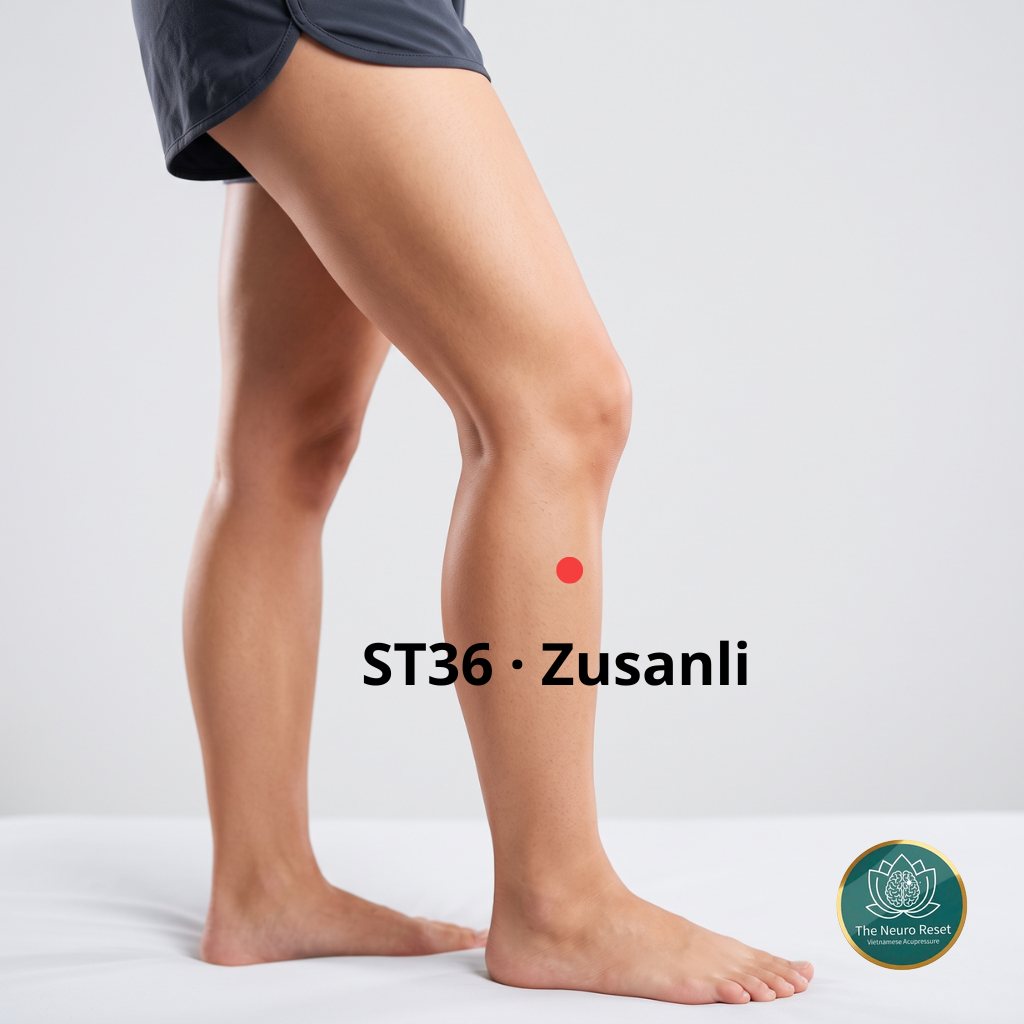
Sit with your feet flat and your knee bent. Find the dip at the outer lower edge of your kneecap. Lay four fingers below it, going down the leg.
Where your lowest finger lies, move one finger-width out from the sharp edge of the shinbone, onto the muscle. Search that patch for the spot that stings. One to three minutes on each leg.
For the lower legs and broken nights: above the inner ankle — Sanyinjiao (SP6)
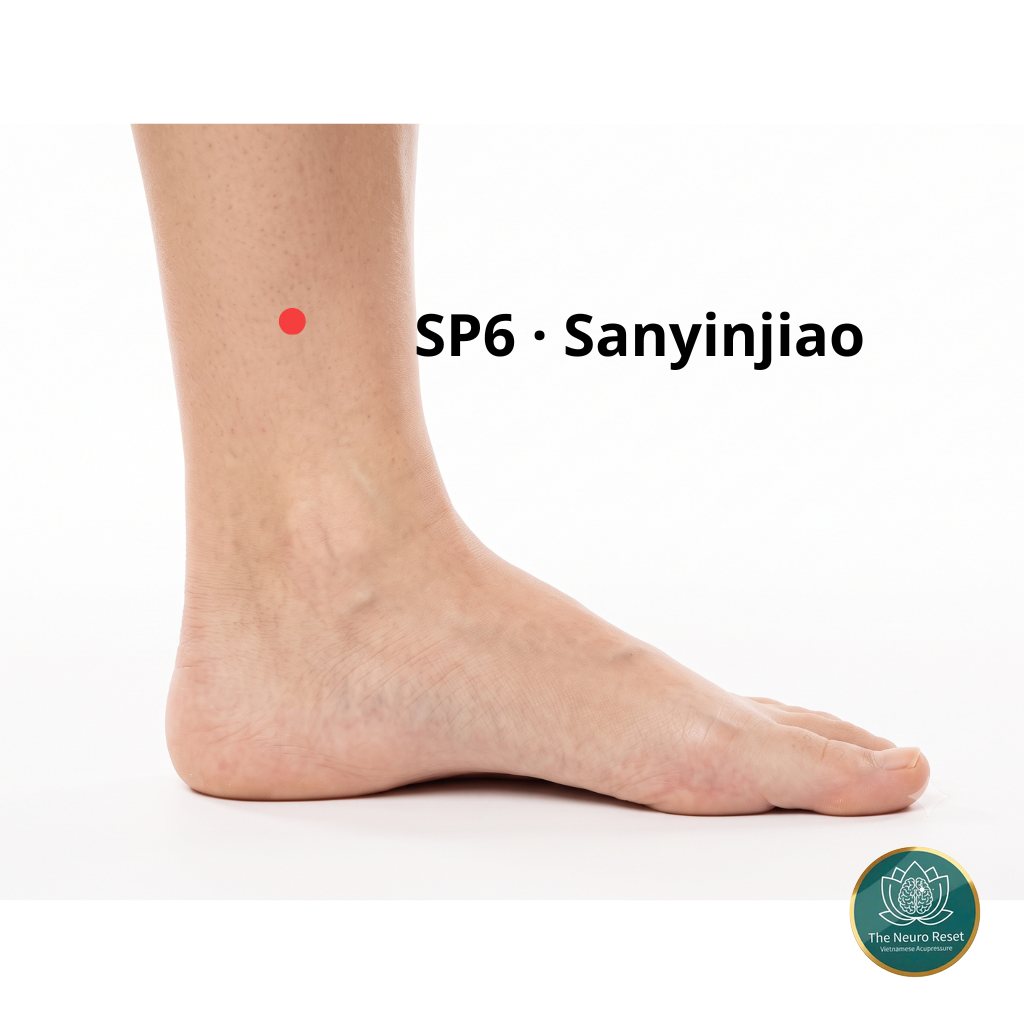
Rest one foot across the other knee. Find the bump of your inner ankle bone and lay four fingers above it. At the level of your top finger, roll off the back edge of the shinbone into the soft groove.
It is often more tender than people expect. One to three minutes, then the other leg. Skip this point if you are pregnant, or if there is a bulging vein, a past clot, broken skin or poor feeling in the feet.
For cold soles: the sole of the foot — Yongquan (KI1)
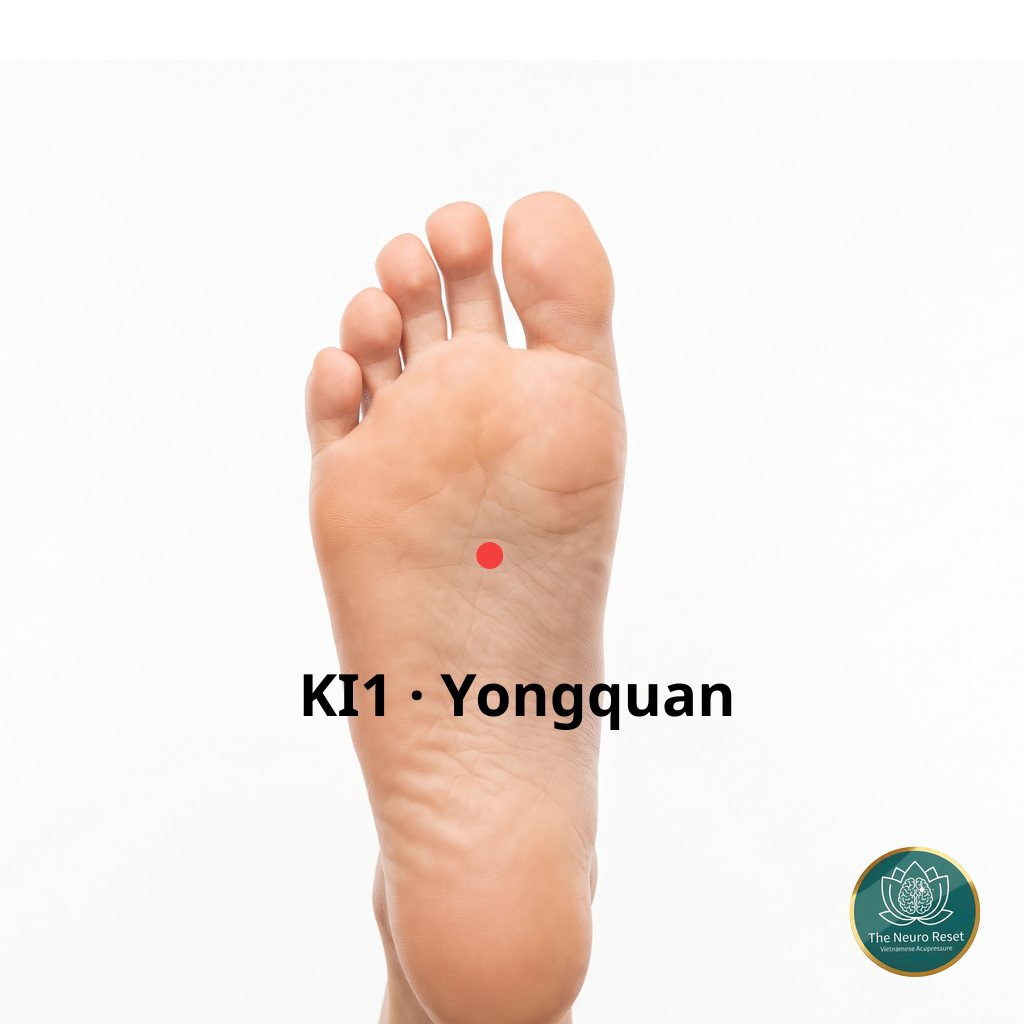
Keep your foot across your knee, sole facing you. Curl your toes. A hollow appears below the ball of the foot, in line with the second and third toes. It sits about a third of the way from the base of those toes to the back of the heel.
Relax the toes and search that hollow until one spot stings. The skin here is thick, so a rounded wooden stick works better than a thumb. One to three minutes on each foot.
Skip it if the sole has cracks, sores or infection, or if your feet have poor feeling.
For everyone: the wrist crease — Shenmen (HT7)
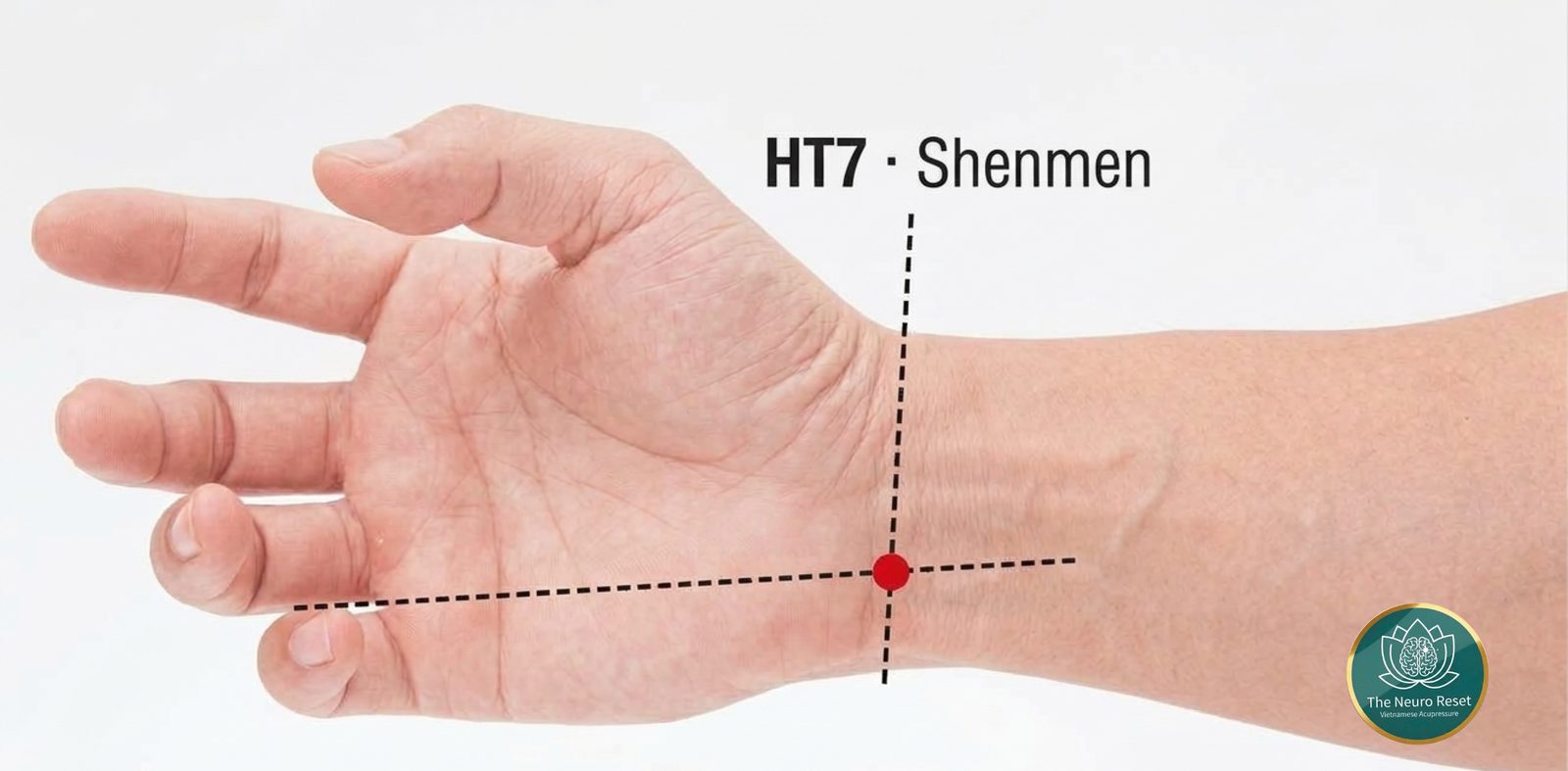
Turn your palm up. Walk your thumb along the wrist crease toward the little-finger side, until it meets a small round bone. Back off a few millimetres. There's a hollow there. Search it with the tip of your thumb, then swap wrists.
When you finish: socks on, lights off, phone face down and out of reach.
How I press the points for cold feet at night
- Find the area. You don't need a pinhead. Get into the right neighbourhood.
- Search for the tender spot. Move slowly around the area. One spot will feel sharper than the rest. That's your spot.
- Make small circles on that spot. Use the tip of your thumb, not the soft pad, with the nail cut short. Circle slowly without sliding away.
Start with about one minute per spot, and build up to two or three over the following nights. It should feel tender while you press and ease once you lift off.
Leave a spot alone if it still hurts after you lift off. The same goes if the pain spreads, or the skin looks swollen, hot or red.
Sore hands, or soles too thick to feel much? A smooth wooden stick with a rounded end can do the pressing for you. It reaches the sole more easily than a tired thumb, and you don't have to bend as far.
When to see a doctor about cold feet at night
Cold feet are common, but sometimes they're a message worth listening to. Please see your doctor if:
- one foot or leg is clearly colder, paler or bluer than the other
- your toes or feet change colour: white, blue, purple or dark red
- a sore, cut or blister on your foot stays open for more than a week or two
- your calf aches when you walk and eases when you rest
- your feet are numb, tingle, burn, or you can't feel the floor properly
- the cold is new, getting worse, or comes with tiredness, weight change or breathlessness
- you have diabetes and notice any change in your feet
Get help straight away if a foot suddenly turns cold, pale or blue and you can't feel or move it properly. That is an emergency.
If any of these fit, start there. The routine on this page can wait.
For a medical view, read the NHS page on peripheral arterial disease, one medical cause of cold feet.
The honest timeline for cold feet at night
Some things work on the first night. Socks on warm feet, a soak, a bed warmed before you get in.
The rest is slower. Daily walking and ankle work take a few weeks to make a difference you can feel. For the pressing, think about ten minutes each evening for two to four weeks. Many people notice their feet warm up sooner and they settle more easily. Some notice very little, and I'd rather you heard that from me now.
What This Won't Do
This won't open narrowed arteries, and it won't repair damaged nerves. It won't promise you a full night, either. If a doctor is looking after your circulation, your thyroid or your diabetes, keep taking exactly what was prescribed. This is something you do in addition. A small, warm routine you can do with your own hands, so the bottom of the bed stops being the coldest place in the house.
Short videos on cold feet at night
Two short clips from my channel on the same subject. Each one is under a minute.
Questions people ask about cold feet at night
Why are my feet always cold at night? Your body lowers its temperature for sleep and protects its core first. Feet are furthest from the heart and lose heat quickly. Lying still for hours slows the blood flow even more.
Can cold feet stop you from sleeping? They can. To fall asleep, your body releases a little heat through the hands and feet. When the feet are cold and tight, that release is slower, and sleep can take longer to come.
How do I warm my feet up in bed fast? Warm them before you get in. A warm soak or a good rub, then loose socks straight away. Warm the bed for ten minutes beforehand, then remove the hot-water bottle.
Are cold feet a sign of poor circulation? Sometimes, but often not. Cold feet that warm up with socks are rarely a problem. One cold foot, colour changes, calf pain on walking or sores that stay open need a doctor.
Is it safe to use a hot-water bottle on cold feet? Use it to warm the bed, then take it out. Never sleep with one against your skin. If your feet are numb or you have diabetes, skip it altogether, because you may not feel a burn.
Should I press points when cold feet wake me at night? I don't. I press in the daytime and before bed. In the night, put your socks back on, flex your feet slowly and breathe out long.
Can a thyroid problem cause cold feet? Yes. A slow thyroid makes the body produce less heat. If cold feet come with tiredness, weight gain or dry skin, ask your doctor for a blood test.
I have spent fifteen years studying traditional Vietnamese medicine, and I write about things you can do for yourself at home, sitting down.
This is general wellness education, not medical advice. It is not a substitute for care from your doctor. If you have a health condition, are pregnant, or take medication, check with your doctor first.
(Points shown: ST36 Zusanli, SP6 Sanyinjiao, KI1 Yongquan, HT7 Shenmen.)