The Pressure Point on Your Foot for a Stiff Neck
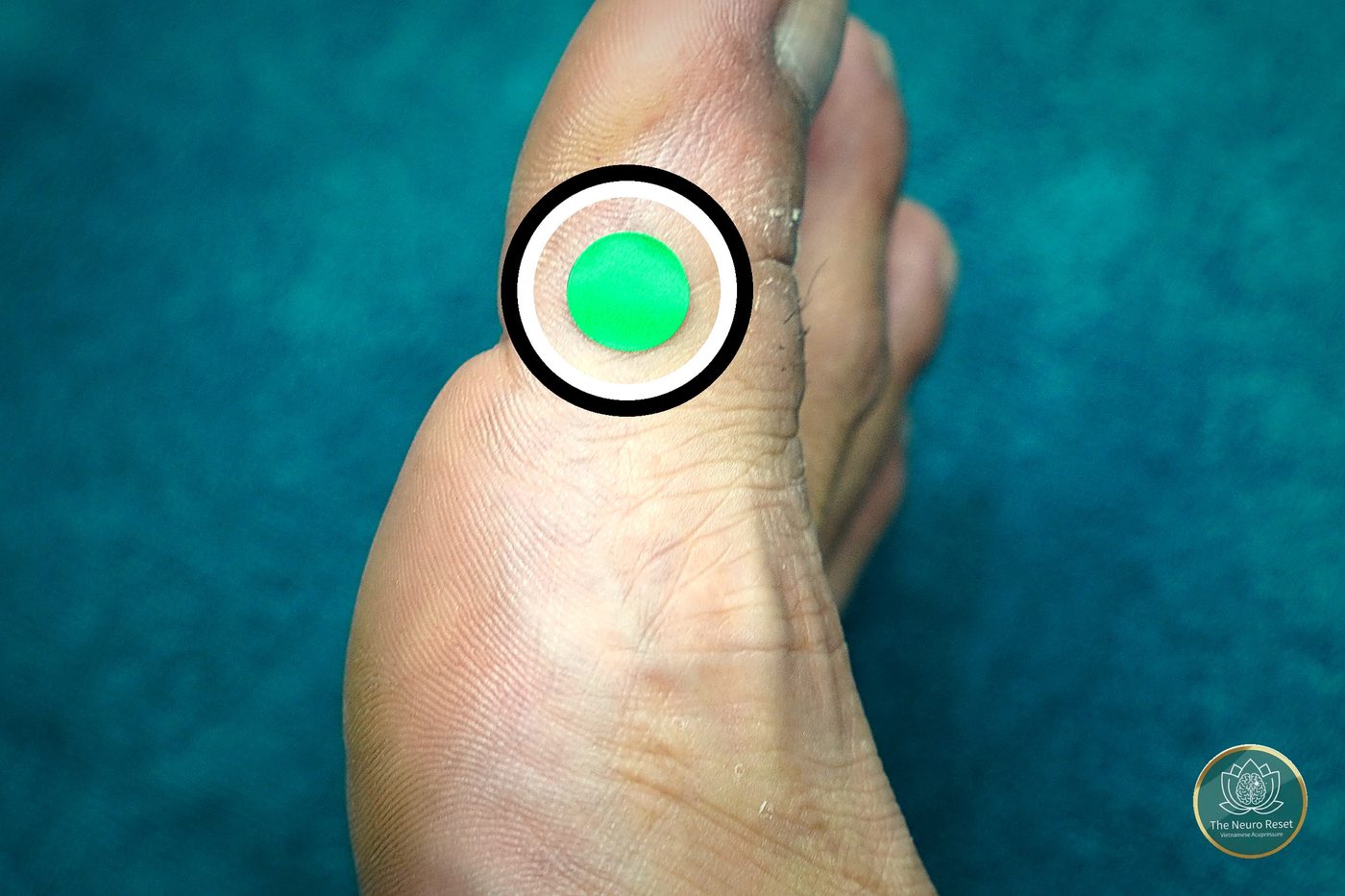
If turning your head to check your blind spot has become a decision rather than a movement, there is a pressure point on the top of your big toe, right behind the first joint, commonly used to ease neck stiffness. Press it for one to two minutes, sitting down, on each foot.
What This Spot Helps With
This one is about the neck — the ache at the back of it, the stiffness that makes turning your head a slow, careful thing rather than an automatic one, the mornings where the first movement of the day is the worst one.
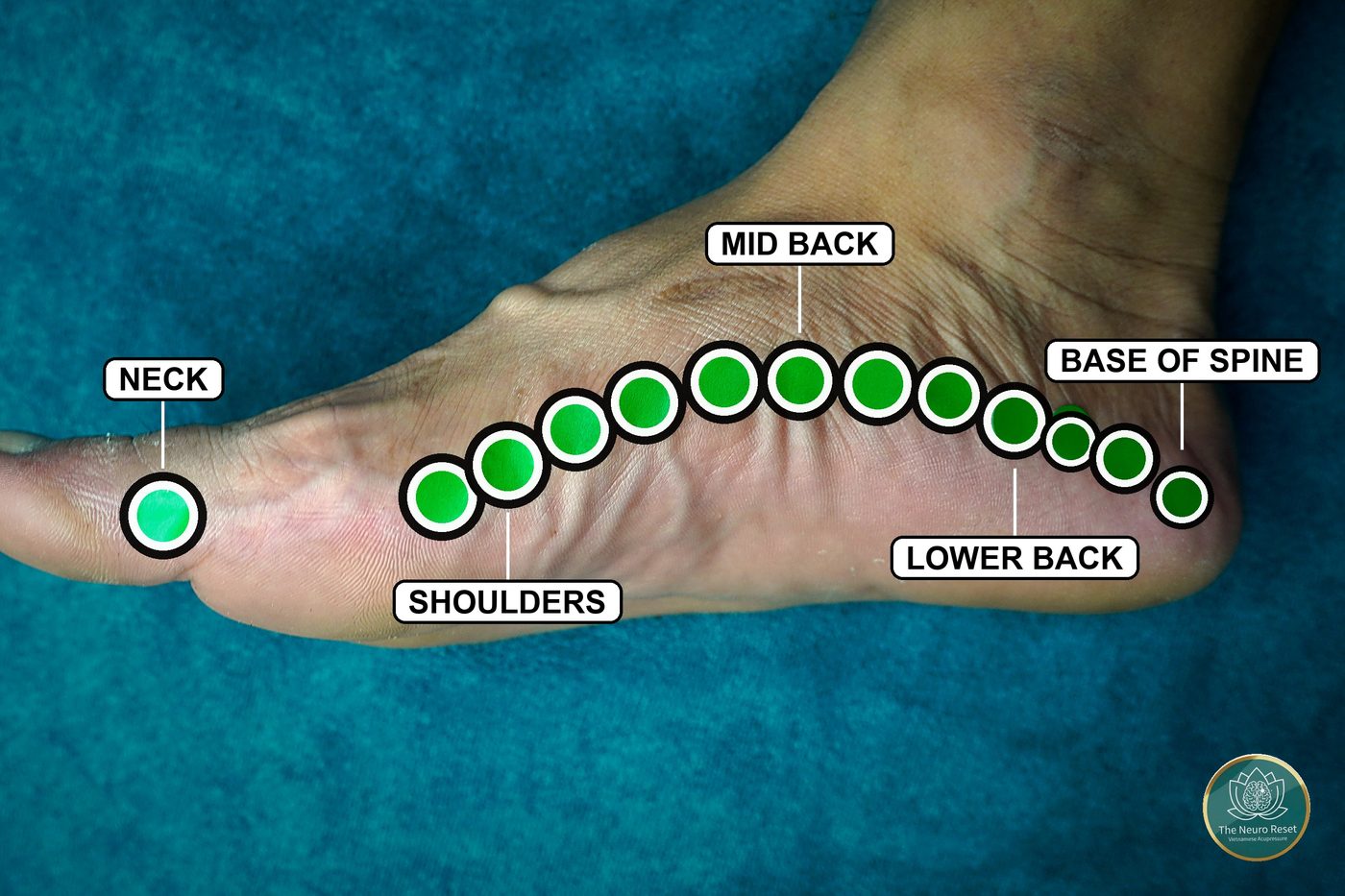
Of the seven spots along the inside edge of the foot, this is the one I put first on purpose. In my experience it is the spot most likely to give something back straight away. Where the neck is stiff rather than injured, people often feel a difference on the very first try. Nothing else on the foot moves that fast.
If you are reading this with your arms folded, waiting to be unimpressed — start here. Let the foot make the argument before you decide anything.
Getting Into Position
You need to see the top of your foot for this one, not the sole. Sitting in a chair with your ankle crossed over the opposite knee works for most people. If that fold is uncomfortable, resting the foot flat on a low stool and reaching down works equally well — every spot in this guide can be worked with one thumb.
How to Find It
Look at your big toe. It has two sections and one crease where it bends. Put your thumb on the top of that toe, on the section nearest your foot — the fatter one, behind the crease.
Now slide your thumb toward the inside edge, the side facing your other foot. You are in the right area: the top of the big toe, inner half, right behind the knuckle. Press in slowly. Somewhere in that small patch, the foot will answer back — a spot that feels sharper or grittier than the skin around it. That is the one.
How to Press It
Thumb on top, first finger underneath to brace. Press down and slightly inward, toward the middle of the toe, rather than straight down onto the bone. Small circles or a press-and-release rhythm both work. Do not slide your thumb across the skin — press in, lift off, move, press again.
How Much Pressure
Here is the only test worth using: if you are holding your breath, you are pressing too hard. If your shoulders are creeping up toward your ears, you are pressing too hard. You want pressure firm enough that the spot is clearly tender, while you are still breathing normally.
How Long
Sixty seconds to two minutes on each foot. If the spot feels quiet, stay on the shorter end. If it answers back sharply, the extra time is worth spending there.
When to Do It
Any time of day works. If your neck is at its worst first thing in the morning, do this sitting on the edge of the bed before you stand up — before the rest of the day has a chance to add to it.
What This Won't Do
I want to be honest about the other side of this. Where the neck is stiff, this often eases within the session itself. Where the neck has been properly locked up for a while — weeks, not days — expect to be doing this for several days before you notice a real change. A few days of two minutes is not much to spend finding out either way.
This is not a substitute for having a neck injury looked at. If the stiffness followed a fall, a jolt, or an accident, or if it comes with numbness, weakness, or pain running down an arm, that is a conversation for your doctor, not a pressure point.
Safety First
Skip this one if the skin on your big toe is broken, cracked, or infected. If you are pregnant, on your period, managing diabetes, a heart condition, or kidney trouble, there are limits on time and pressure that apply to every spot on the foot, not only this one. Read the full list before you start: Foot Pressure Point Safety Guide.
FAQ
How fast will I feel a difference in my neck? For ordinary stiffness, often within the first session. For a neck that has been locked up for a while, give it several days of once-a-day pressing before you decide it isn't for you.
Can I do this every day? Yes. Once a day is the pattern most people use, on both feet.
What if my neck doesn't loosen at all? Some necks respond slowly, and some don't respond to foot pressure at all — that happens. If there is no change after a couple of weeks, or if anything about the stiffness is getting worse, that is worth mentioning to your doctor.
Does this replace seeing a doctor or a physical therapist? No. This sits alongside whatever care you are already getting, not instead of it. Keep taking anything you have been prescribed.
This page shares general information about a traditional practice. It is not medical advice and does not replace what your doctor has given you. If you are pregnant, managing a health condition, or unsure whether this applies to you, check with your doctor first.
For the neighbouring spot on the same toe, see the foot pressure point for a sore, twisted neck. For the spot I would keep if I could only keep one, see the foot pressure point for lower back pain. All seven spots, in order, with photographs of exactly where to put your thumb, are laid out in The Foot Map — the free book.
(Zone shown: Cervical Vertebrae reflex zone, No. 53.)