The Foot Pressure Point for Lower Back Pain
For a lower back that catches when you stand up from a chair, there is a pressure point at the top of your foot's arch. Of the seven spots along the inside edge of the foot, this is, after fifteen years of practice, the one I would keep if I could only keep one — pressed slowly, two to three minutes, on each foot.
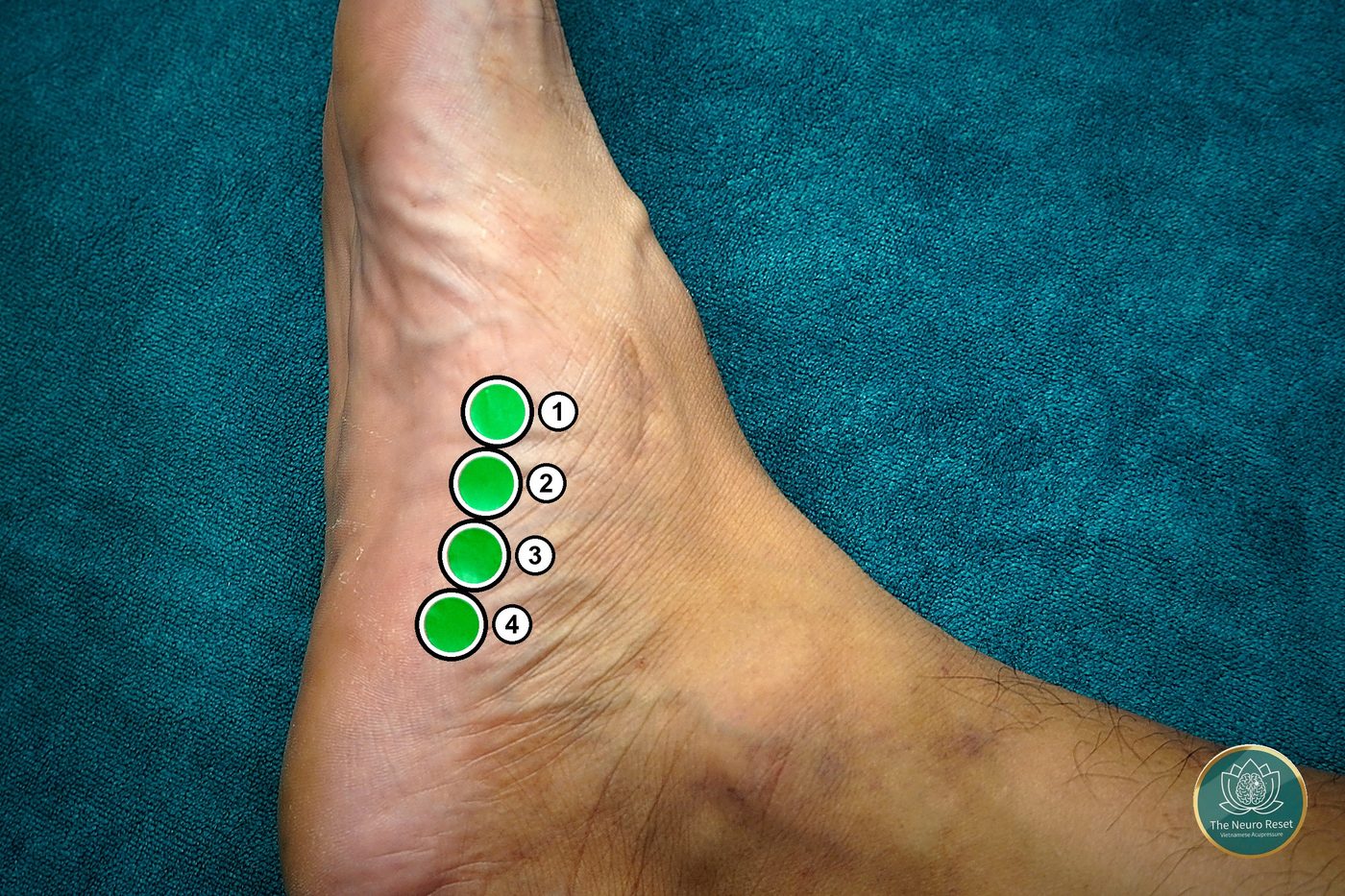
What This Spot Helps With
This spot is for the lower back — the sudden catch when you stand up, the morning when putting your socks on turns into a negotiation with your own spine, and the tiredness low in the back that is never sharp but never quite leaves either.
Of everything along this line, from the big toe to the heel, this is the spot I would point to first. It sits at the top of the arch, and in my experience it is the most reliably useful spot on the whole foot for a lower back that has gone into a sudden spasm. I am not going to dress that up with a number or a percentage, because I do not have one to give you. I am telling you what fifteen years of pressing this spot, on other people's feet and my own, has shown me.
Getting Into Position
The inside edge of the foot, at the highest part of the arch — the same edge used for the spot on your middle back, a little further along it.
How to Find It
Run your thumb backward along the inside edge, starting from behind the big-toe knuckle. The ground falls away and the edge rises into the arch. The highest part of that inside arch — the hollow sitting above where the foot would touch the floor — is the spot.
It is a short stretch, about the length of your thumb. Press along it slowly. One part of it will usually be sorer than the rest — that is the part to stay with.
How to Press It
Press your thumb into the hollow, angling up and slightly outward into the arch rather than straight down. Hold longer here than anywhere else on the foot: press, hold for a slow count of five, ease off, and repeat along the short stretch.
How Much Pressure
Firm. This is the sturdiest part of the inside edge, and it takes real pressure before it registers as tender. You should still be breathing normally throughout — always.
How Long
Two to three minutes on each foot is the range worth aiming for, more than most of the other spots on this line.
When to Do It
Morning, before you stand up, if your mornings are the worst part of the day. Evening, if it is the day itself that wears the back down. Either can work — the pattern that matters more is doing it daily.
What This Won't Do
Even for the strongest spot in the set, I want to be honest about its limits. For a lower back that has ached for twenty years, this is slower, and it is partial. Both of those things are true, and you deserve to know both before you start, not after three weeks of pressing.
There is also a specific warning worth taking seriously: if you have sciatica, the first few days of pressing this spot may feel worse before they feel better. That is a known, expected part of working this area, and it tends to settle. It is not a reason to stop on day two. But if the pain is sharp, new, or travels somewhere it has not been before, stop and speak to your doctor.
If you are pregnant, this spot in particular is not for you — skip it entirely, along with the rest of the foot work in this set.
Safety First
The usual limits for diabetes, a serious heart condition, and kidney trouble apply here, along with everywhere else on the foot. Read the complete list, including the sciatica note above, before you start: Foot Pressure Point Safety Guide.
FAQ
How fast will I feel a difference in my lower back? For a sudden catch or spasm, often within the first few sessions. Give it about a week before deciding either way, and about three weeks before making up your mind fully.
Is it normal for the ache to feel stronger at first? Yes, particularly if you have arthritis, rheumatic pain, or sciatica. The first two or three days can feel louder before they settle. That is expected, not a sign that something is wrong.
Can I do this if I have sciatica? Generally yes, with the understanding that the first few days may feel more intense before easing. If anything sharp, new, or spreading further down the leg shows up, stop and check with your doctor.
Does this replace seeing a doctor for lower back pain? No. This sits alongside medical care, not instead of it — particularly for a back that has ached for years rather than days.
This page shares general information about a traditional practice. It is not medical advice and does not replace what your doctor has given you. If you are pregnant, managing a health condition, or unsure whether this applies to you, check with your doctor first.
The Other Six Spots on the Same Line
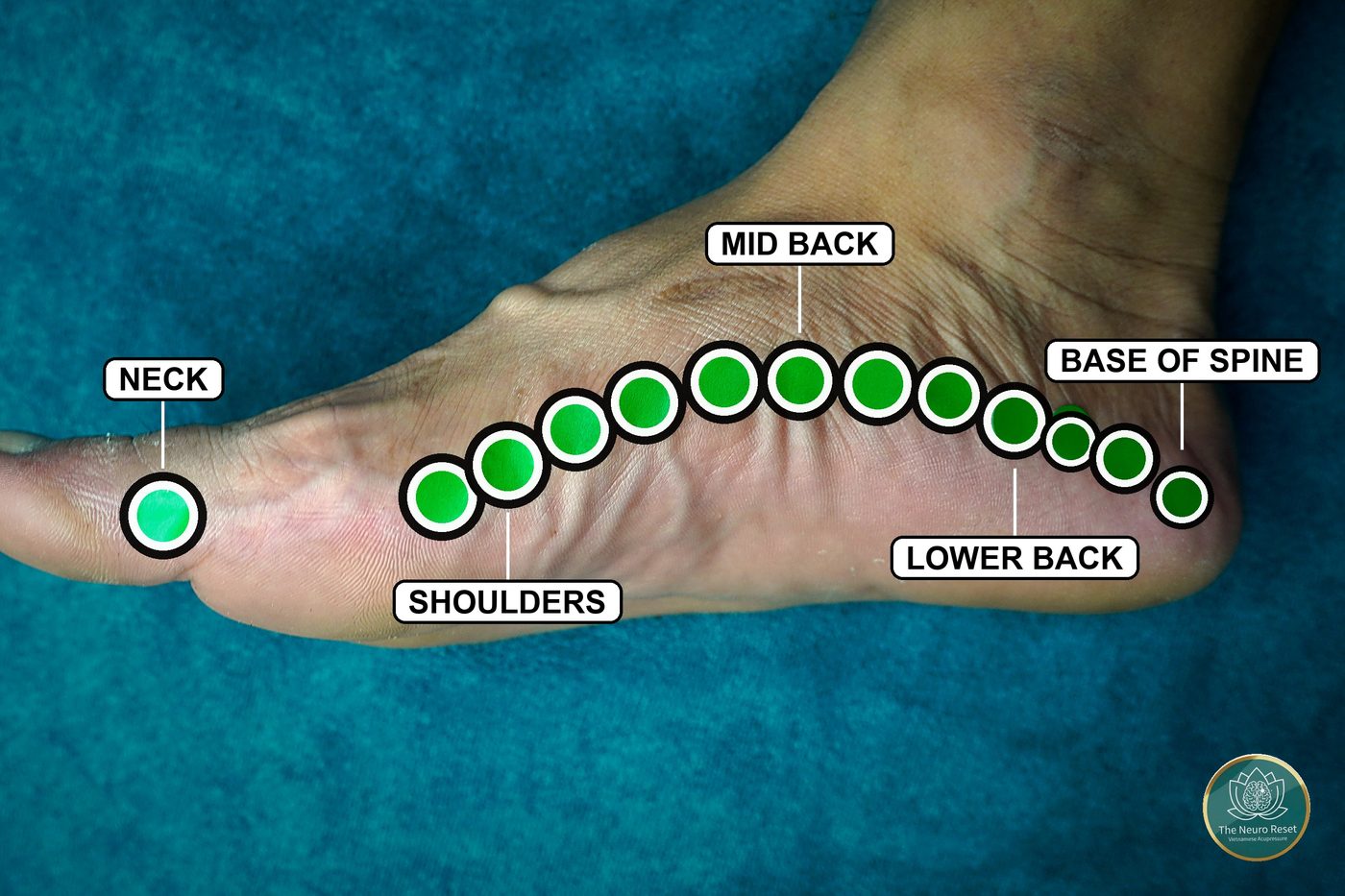
This arch spot is one stop on a longer line that runs from the base of the big toe to the heel, following the shape of the spine. The other six spots are:
- The pressure point for a stiff neck — top of the big toe
- The pressure point for a sore, twisted neck — whole base of the big toe
- The pressure point for tight shoulders and upper back — band across the ball of the foot
- The pressure point for shoulder pain — little-toe knuckle
- The pressure point for pain between the shoulder blades — long inside edge
- The pressure point for sciatica and tailbone pain — inside of the heel, worked alongside this one
All seven, laid out in order with photographs of exactly where to place your thumb, are in The Foot Map — the free book.
(Zone shown: Lumbar Vertebrae reflex zone, No. 55.)