The Foot Pressure Point for Pain Between Your Shoulder Blades
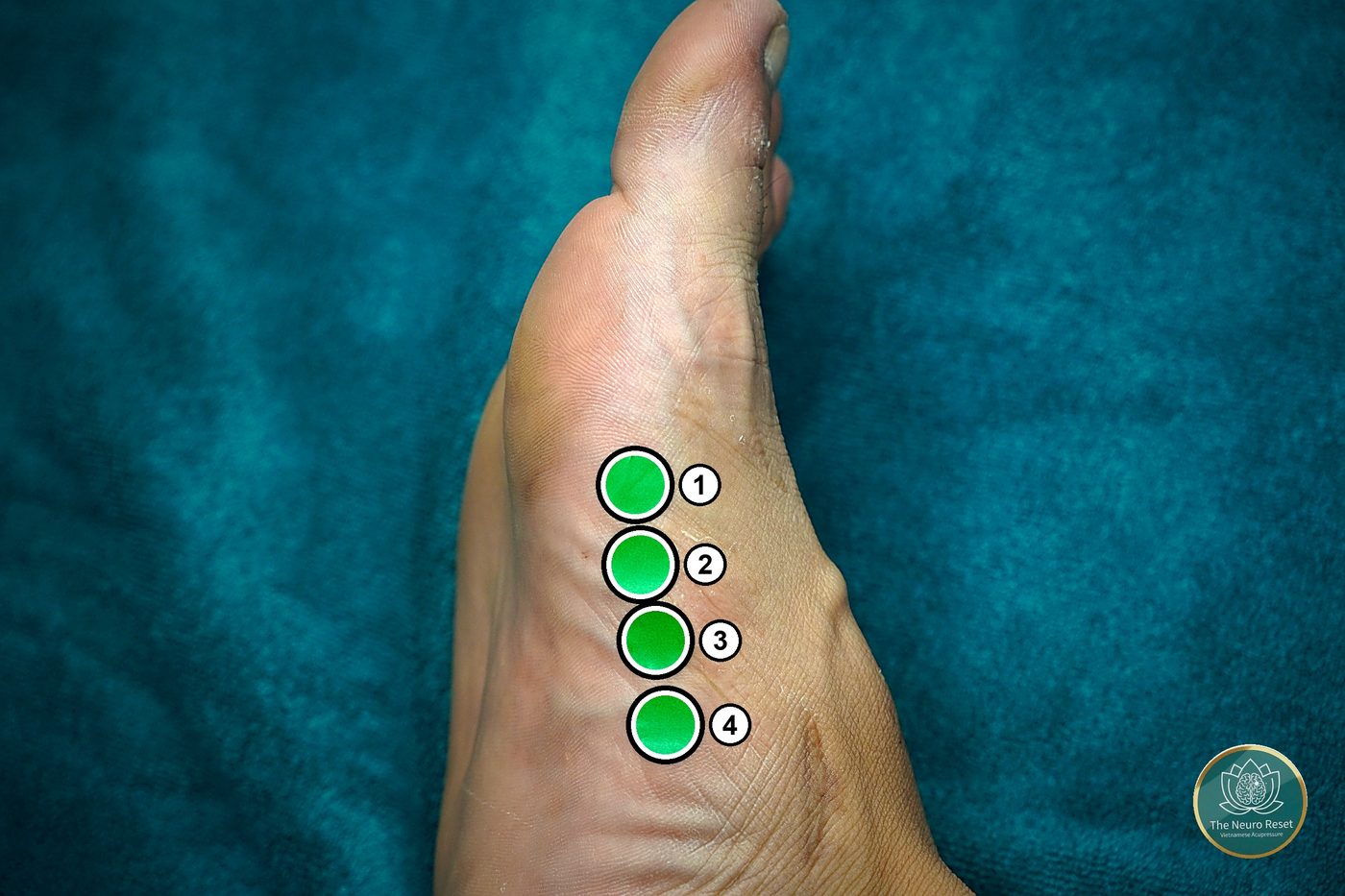
The spot between your shoulder blades that your own hand cannot reach has a pressure point on your foot instead — a long stretch along the inside edge, behind the big-toe knuckle, walked step by step with your thumb for one to three minutes on each foot.
What This Spot Helps With
This one is for the middle of your back — the spot between the shoulder blades that no hand can quite reach, the band of ache that wraps around toward the ribs, and the stiffness through the middle of the spine that can make a deep breath feel shorter than it should.
Getting Into Position
The inside edge of the foot again, the side facing your other foot — the same edge used for most of the spots on this line.
How to Find It
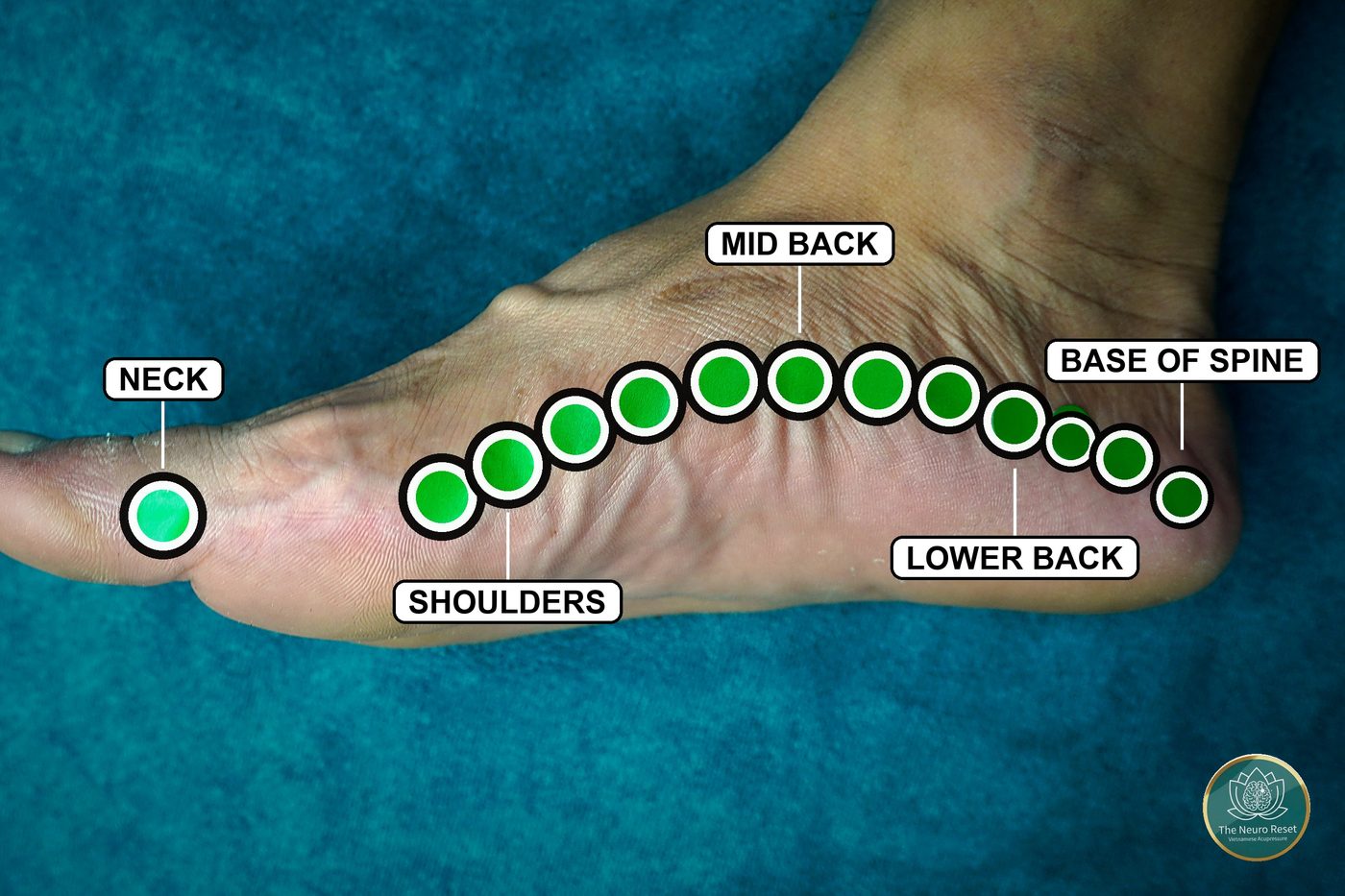
Put your thumb right behind the knuckle of your big toe, on the inside edge. Now run it backward along that edge, toward the arch, until the ground starts to rise away from the floor.
That whole stretch of edge — from behind the big-toe knuckle to where the arch begins — is the spot. It is read, in this tradition, as the middle back laid out in order along the foot: the end nearest the toe relates to the top of that stretch of your back, the end nearest the arch to the bottom of it.
How to Press It
Walk your thumb along the stretch rather than pressing one point. Press, hold, lift, move a small step, press again. Two or three passes down the whole edge is a reasonable start. Then go back to whichever step answered loudest, and stay there longer.
How Much Pressure
Firm and steady — this edge takes more pressure than the toe does before it feels tender.
How Long
One to three minutes per foot. Finding the exact step that is sore is most of the work here, so it is worth taking your time rather than rushing through it.
When to Do It
Any time of day. This is a good spot to work slowly rather than quickly, since the sore step within the stretch is what matters more than the overall time spent.
What This Won't Do
I want to set expectations honestly here. This spot moves slower than the neck spots — it is a maintenance spot rather than a rescue spot, meaning it tends to help most with steady, regular use rather than giving a fast change in a single session.
This stretch is also read, in the tradition this comes from, as relating to more than the back alone. You may notice more than you expected while working it. That is not a mistake, and it is not something to be alarmed by — but it is also not something backed by a mechanism I can explain in modern terms, and I would rather say that plainly than dress it up.
Safety First
The usual limits for pregnancy, diabetes, heart conditions, and kidney trouble apply here as they do across the whole foot. Read the full list before starting: Foot Pressure Point Safety Guide.
FAQ
Why is this described as a "maintenance" spot rather than a fast-relief one? Because in practice it tends to respond to regular, steady use rather than giving a quick change in one sitting, unlike some of the other spots on this line.
How do I know where along the stretch to focus? Walk your thumb along the whole edge first. Wherever it answers back sharper or grittier than the rest is where the extra time should go.
Can I do this alone, or does it need to be paired with another spot? It works on its own, but many people find it sits naturally after the neck and shoulder spots, moving down the same line of the foot.
Is it normal to feel something beyond my back alone when I press this? Some people report this. It is not unusual within the tradition this comes from, though it is not something with a clear medical explanation.
This page shares general information about a traditional practice. It is not medical advice and does not replace what your doctor has given you. If you are pregnant, managing a health condition, or unsure whether this applies to you, check with your doctor first.
This spot sits right before the strongest point on the whole foot: the foot pressure point for lower back pain. From there, the line continues to the foot pressure point for sciatica and tailbone pain. All seven spots are laid out with photographs in The Foot Map — the free book.
(Zone shown: Thoracic Vertebrae reflex zone, No. 54.)