The Foot Pressure Point for Sciatica and Tailbone Pain
For pain that starts at the base of your spine and runs down the back of your leg, there is a pressure point on the inner wall of your heel. It is worked alongside the arch spot for lower back pain, never on its own, pressed firmly for one to two minutes on each foot.
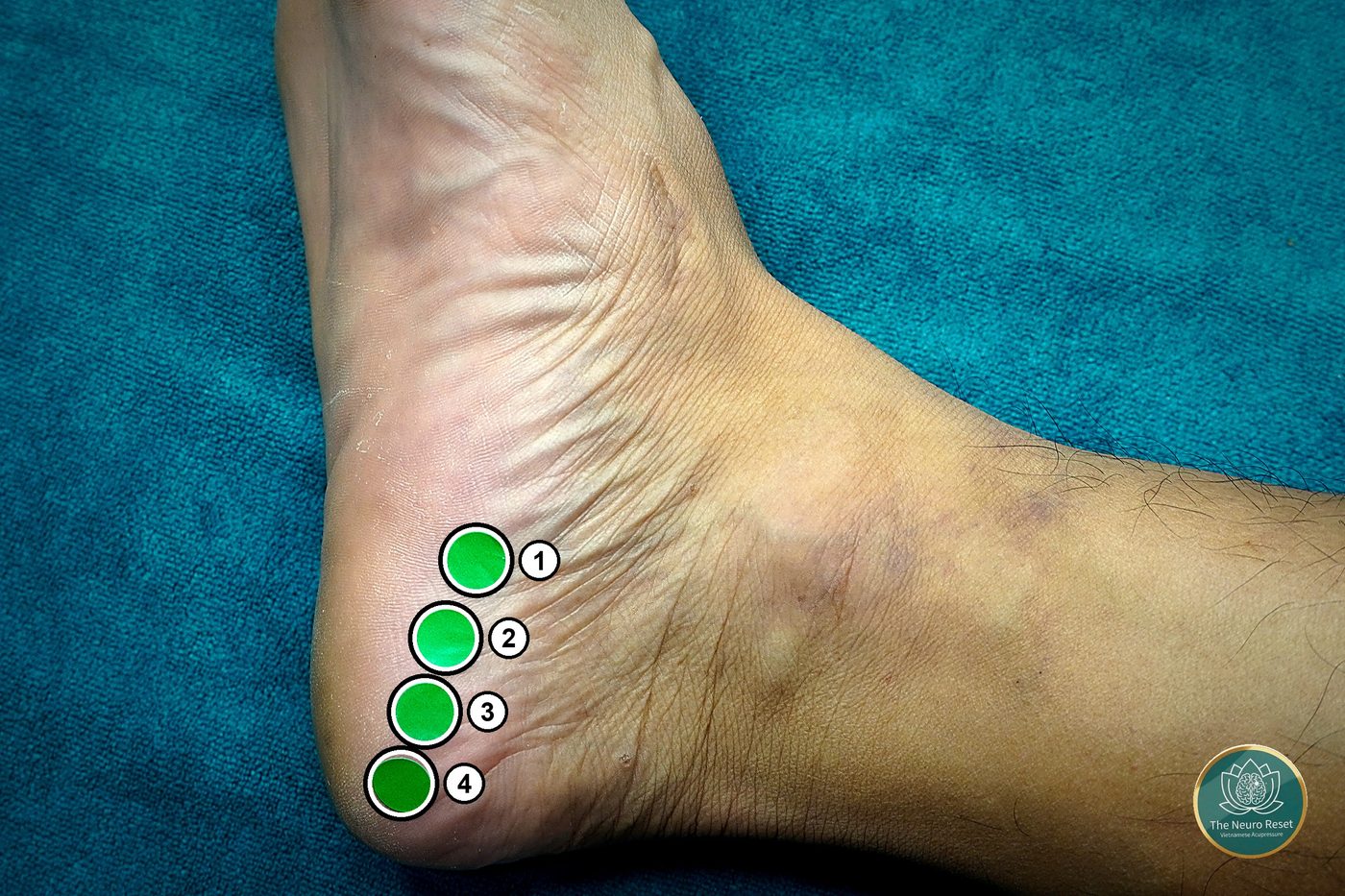
What This Spot Helps With
This spot is for the very base of the spine, and for pain that runs from there down the back of the leg. It is also used for the base of the spine after a fall or a hard landing onto the tailbone — the kind of injury that happened years ago and never entirely settled down.
Getting Into Position
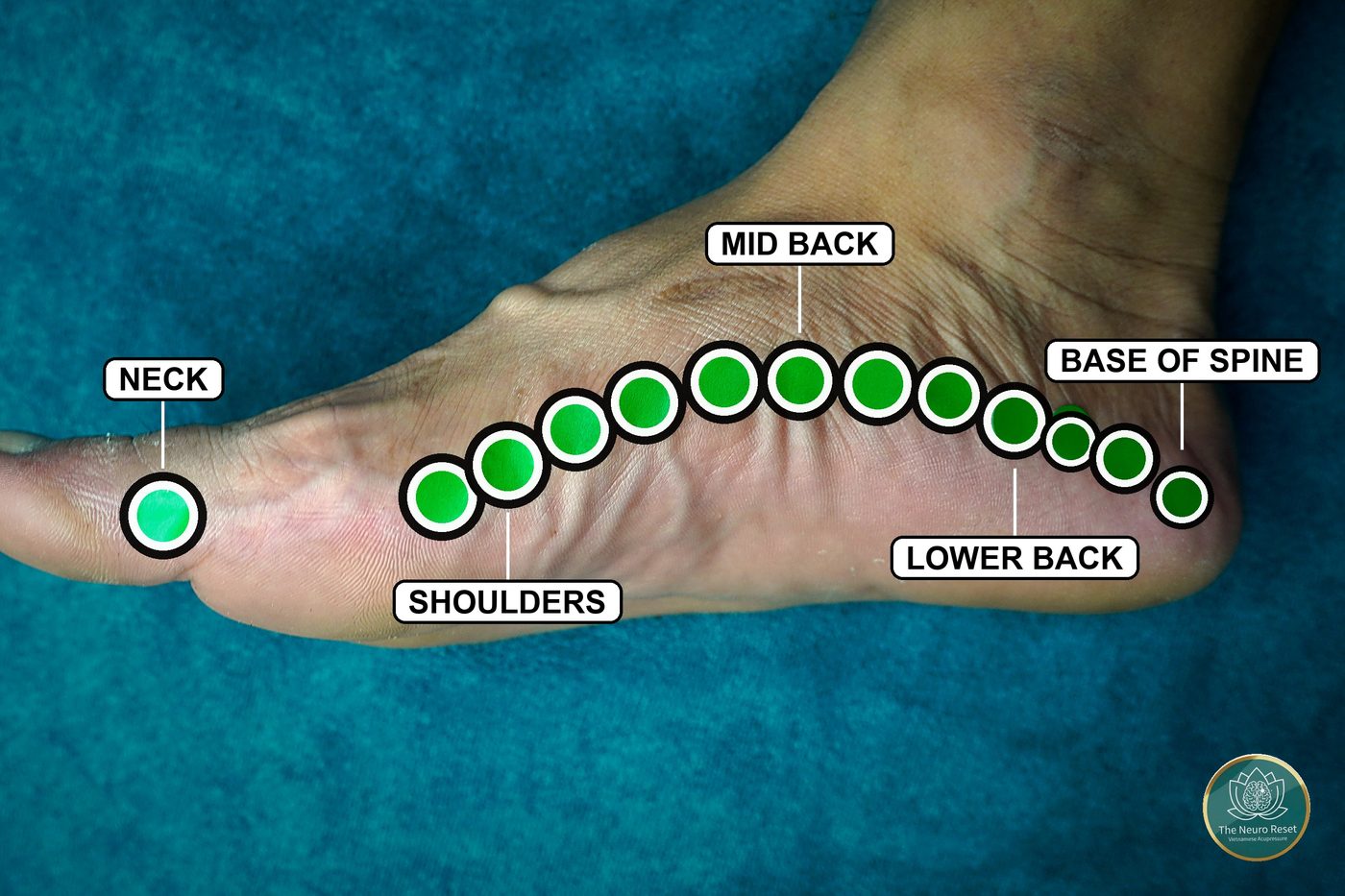
The inside edge of the foot, continuing back past the arch into the heel — the last stop on this line before it runs out of foot.
How to Find It
Follow the inside edge back from the top of the arch. The arch falls away, and you arrive at the heel. The spot is on the inside face of the heel — the flat inner wall of it, not the bottom, and not the back. Press into that inner wall with your thumb and work back toward the rear of the heel.
How to Press It
The heel is thick-skinned, and it needs more than the rest of the foot does. Press hard enough to actually reach the tissue underneath the surface. Hold, release, move a short distance, and repeat. If your thumb tires — and on the heel, it will — switch to the knuckle of your first finger instead.
How Much Pressure
The firmest of all seven spots on this line. The skin here is built for standing on, and it takes real pressure before anything registers.
How Long
One to two minutes per foot, worked alongside the arch spot rather than on its own.
When to Do It
Alongside the lower back spot, always. In my experience, this spot does its real work in company — the base of the spine and the lower back are worked together, not separately, and skipping straight to this one without the arch spot leaves most of the value on the table.
What This Won't Do
I want to be as honest about this spot as I have been about every other one, maybe more so. On its own, this spot is modest. Paired with the arch spot for the lower back, it is considerably more — that is exactly how it was taught to me: this spot earns its place next to the lower back, not instead of it.
For pain running down the back of the leg, foot work is the slowest thing in this whole set. Expect weeks, not days. And the first few days may be louder before they are quieter, the same pattern as the arch spot above it. If that sounds like too honest a sales pitch for a page trying to get you to press your own foot, I would rather you decide with the real information in front of you than a shorter, tidier version of it.
Safety First
Skip this spot if the skin on your heel is cracked or split — common on this part of the foot — until it has closed over and settled. The complete safety list, including the sciatica note that applies to both this spot and the arch spot above it, is here: Foot Pressure Point Safety Guide.
FAQ
Why does this spot need to be paired with another one? In practice, it does more when worked together with the arch spot for the lower back than it does alone — the base of the spine and the lower back sit right next to each other on the foot, the same way they sit next to each other in your body.
How long before pain running down my leg gets better? This is the slowest response in the whole set — weeks rather than days is the honest expectation, not a quick change in a single session.
Is it normal for the pain to feel worse in the first few days? Yes, for some people, the same way the arch spot can feel louder before it settles. If anything sharp, new, or spreading further shows up, stop and speak to your doctor.
My heel is cracked — can I still do this? Not until the skin has closed over and settled. Cracked heel skin is common, and it is worth waiting it out before pressing this spot specifically.
This page shares general information about a traditional practice. It is not medical advice and does not replace what your doctor has given you. If you are pregnant, managing a health condition, or unsure whether this applies to you, check with your doctor first.
Always pair this with the foot pressure point for lower back pain — the two are worked together, not separately. The spot right before it on the same line is the foot pressure point for pain between the shoulder blades. All seven spots are laid out with photographs in The Foot Map — the free book.
(Zone shown: Sacrum reflex zone, No. 56.)